
16-02-2026
How the Olympics Turned Opening Ceremonies into Immersive Global Shows ...


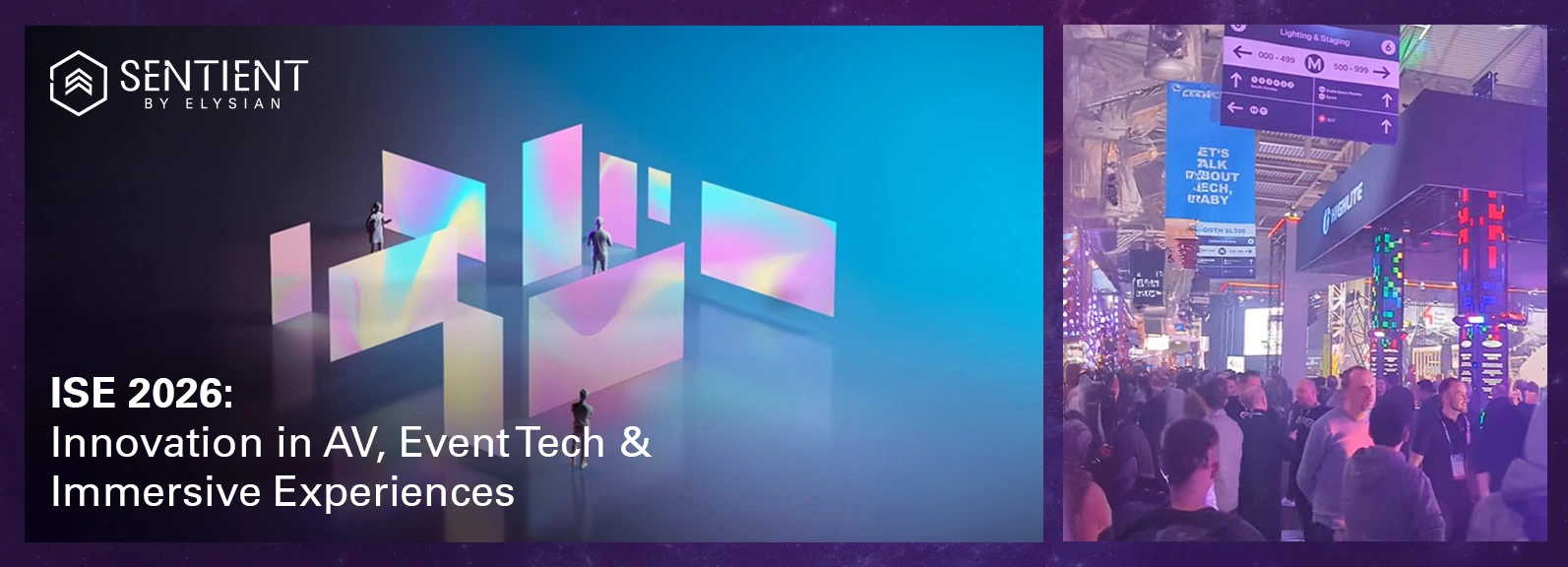
ISE 2026 showcased the latest in audiovisual innovation, immersive technology, and experiential events. From 4–7 February, global brands, engineers, and designers converged in Barcelona to explore integrated AV systems, interactive displays, and cutting-edge exhibition design. Highlights included live drone performances, holographic installations, and multi-sensory experiences that demonstrated how technology can transform corporate events, cultural landmarks, and public spaces. Beyond product launches, ISE provided insights into industry trends, automation, and scalable solutions, reinforcing the importance of creativity, collaboration, and human-centered experiences in shaping the future of event production and brand engagement worldwide.
Introduction: ISE 2026 Overview
Defining the Event: What ISE Represents Today
Innovation in Action: Breakthrough Technologies
Captivating Spaces: Booths That Speak Without Words
Global Brands on a Global Stage
Looking Ahead: Insights and Industry Shifts
Integrated Systems Europe 2026 lived up to its reputation once again as the world’s preeminent platform for audiovisual and experiential technology . From 4–7 February, thousands of engineers, designers, and global brands converged to unveil the tools, systems, and innovations driving corporate event production and immersive experiences we see in museums, live events, public installations, and ceremonies worldwide. The exhibition floor was less a display of products than a living demonstration of the invisible infrastructure behind immersive storytelling — a place where scale, precision, and creativity intersect to define the future of AV.
But ISE is more than just technology on show — it is a reflection of industry vision, a stage for global brands to assert leadership , and a barometer for the trends shaping how we experience space, sound, and storytelling in the years ahead. Curious already? Let’s dive in.
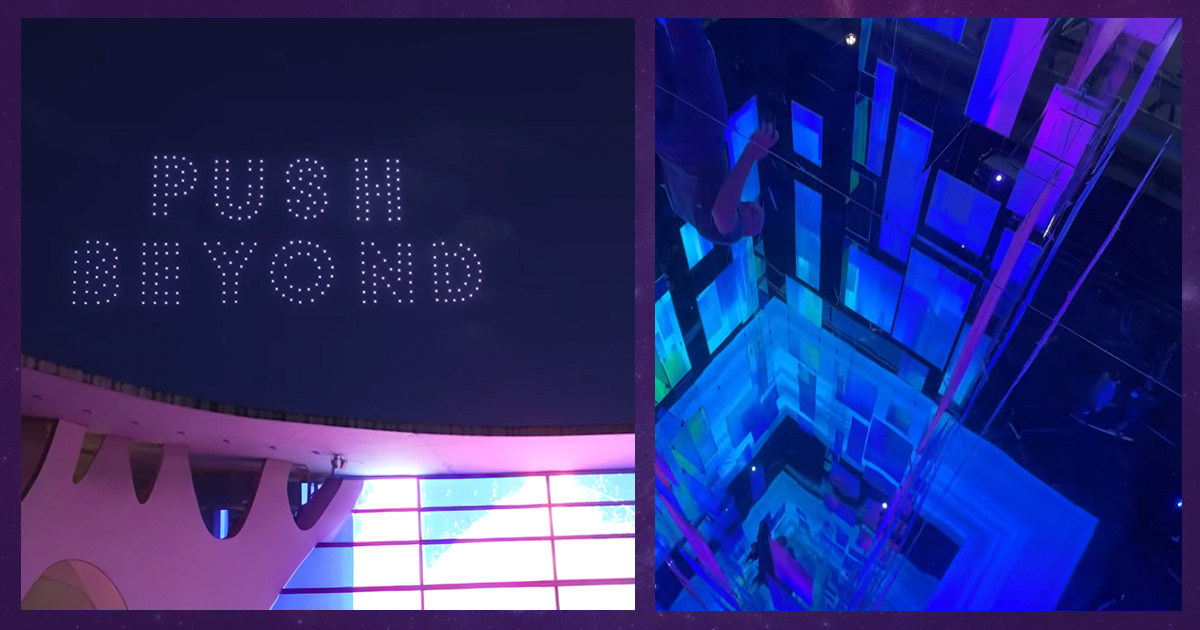
ISE 2026 did more than attract visitors — it pushed the global audiovisual and systems integration community to re‑evaluate what immersive technology can achieve. Anchored by the bold theme ‘Push Beyond,’ this year’s edition challenged attendees and exhibitors alike to explore the next generation of experiential events that redefine how we engage with the space, sound, and interaction.
Set within the expansive Fira de Barcelona Gran Via, the show floor spanned over 100,000 m² across interconnected halls grouped into themed technology zones . Each zone guided visitors through aspects of the audiovisual ecosystem — from design to stand exhibition layouts that highlight integrated technologies, staging, interactive media, and large‑scale display solutions. Rather than a maze of booths, the layout felt like a curated exploration of where the industry is headed. The spacious design enabled attendees to engage deeply with technologies and to see how solutions across categories interoperate in real time.
What set this edition apart was the range of live experiences woven throughout the halls. Beyond traditional demos, ISE featured spatial audio concerts, holographic installations with live musicians, large‑scale drone displays, and choreographed robotic performances. These weren’t background attractions — they were immersive demonstrations showing how projection mapping, LED architecture, and multi‑sensory systems combine to create highly engaging environments that could easily be scaled for museums, concerts, or complex public spaces.
This year’s event also saw record attendance, welcoming 92,170 visitors and more than 1,750 exhibitors, including over 300 first‑time participants. Global brands such as Samsung, LG, and Microsoft leveraged this stage to make immersive brand statements , using design, scale, and interactive storytelling to demonstrate their latest innovations.
The combination of thematic organization, record participation, and live, experiential showcases underlined ISE’s role not just as a trade exhibition, but as a strategic lens into the future of immersive technology — a lens through which industry priorities and audience expectations are increasingly aligned.
The event brought technology to life in spectacular ways, merging engineering and performance to show what’s possible when innovation meets creativity. One of the most talked-about highlights was “Phantom of the Voice,” a live audiovisual performance staged on the glass façade of the Fira de Barcelona Gran Via’s south entrance. In this multidisciplinary production, a piano and string ensemble performed alongside a fleet of 600 drones, all projected against a 193 m² Muxwave Holographic Invisible Screen , turning the venue into a fully immersive canvas. The performance demonstrated not only technical precision but the storytelling potential of projection mapping, spatial audio, and integrated LED systems.
Beyond live spectacles, ISE 2026 was a launchpad for next-generation AV innovations. Samsung Electronics unveiled its Spatial Signage platform, an 85‑inch glasses-free 3D display with AI-powered content tools, allowing immersive depth in commercial and public spaces without headsets. TCL Professional showcased advanced LED solutions for enterprise and large-scale installations, while Panasonic’s MEVIX lineup demonstrated high-performance projection systems designed for live venues and interactive spaces.
These technologies were rarely static. Exhibitors paired each launch with interactive demonstrations, allowing attendees to experience real-time performance — from drone choreography synced with live music to multi-dimensional spatial audio and ultra-bright LED storytelling. The result was a vivid reminder that AV innovation is not just about hardware, but about how technology orchestrates experiences that audiences can see, hear, and feel.
ISE 2026 proved that the future of immersive technology lies in integration, interaction, and performance. Every product, every live demo, and every staged performance illustrated a core principle: innovation only truly matters when it transforms the way we experience the world around us.
At ISE 2026, the exhibition floor was more than a collection of product displays — it became a stage for storytelling through design, interactivity, and creativity. Several exhibitors used architecture, lighting, and immersive media to make their booths stand out, showing that a space can communicate a brand’s vision without a single word. First-time participants and smaller innovators were just as inventive, proving that scale isn’t the only measure of impact.
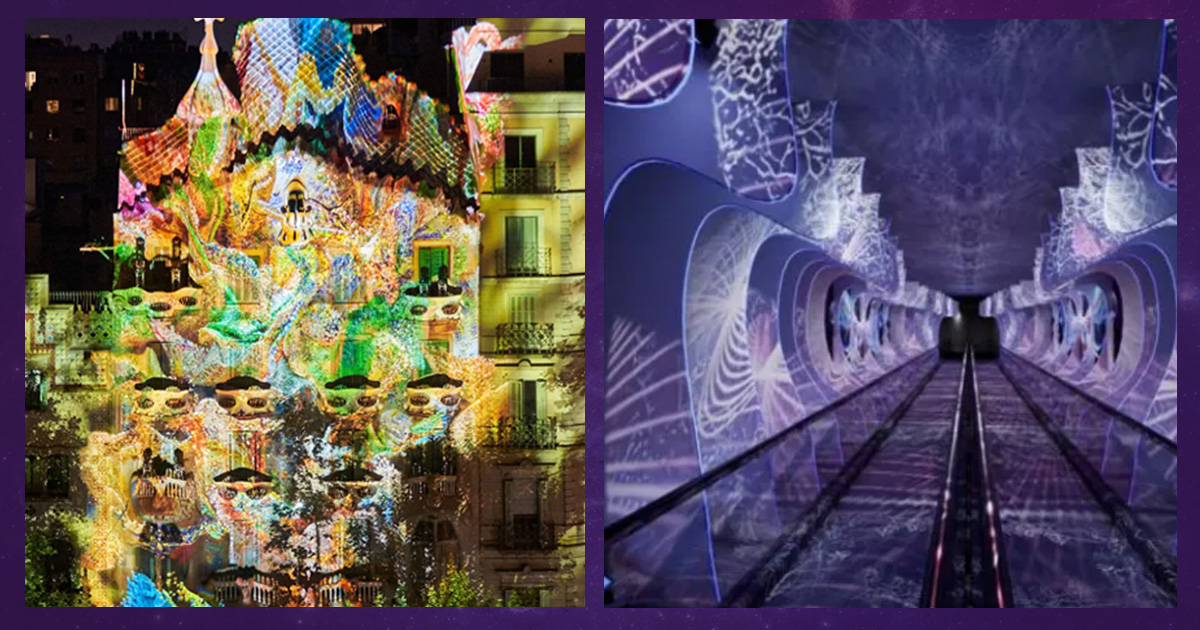
Created by the Barcelona-based studio Instronic, BREATHE transformed a standard transit corridor into an experiential passage. Visitors walking through the installation were enveloped in spatial audio, synchronized with a flowing sequence of visuals projected along the walls and floor, creating a sensation of movement and immersion. This installation demonstrated how even transitional spaces in large venues can become interactive experiences , turning a mundane passage into a moment of mindfulness and sensory engagement. BREATHE highlighted the potential for AV technology to enhance environmental storytelling and engage audiences in unexpected, memorable ways.
Part of ISE’s extended cultural programming, the famed Casa Batlló façade in Barcelona was transformed using high-resolution projection mapping and audiovisual design. Titled “Hidden Order,” the installation reinterpreted the building’s architectural curves and patterns with layered visual effects, revealing hidden geometries and motion sequences that accentuated the iconic design. The work not only captivated onlookers but illustrated how immersive AV technology can enhance cultural landmarks, bridging art, history, and cutting-edge projection techniques. It served as a prime example of technology interacting with urban space, transforming public environments into live storytelling canvases.
These specialized demo zones allowed attendees to experience high-fidelity spatial audio and integrated AV systems in controlled, real-world contexts. The Listening Suites recreated concert-like audio environments, enabling participants to understand how sound systems perform in live venues, while the Connected Classroom showcased cutting-edge event technology designed to create fully immersive and interactive learning and collaborative environments for education and corporate settings. By simulating realistic environments, these installations emphasized integration, usability, and experiential quality, showing how AV technology can elevate learning, collaboration, and professional presentations beyond simple hardware specifications.
Numerous first‑time and smaller exhibitors turned compact spaces into intimate, interactive experiences that rivaled the impact of the largest booths. Interactive Scape invited visitors to manipulate digital content using tangible multitouch surfaces and object recognition, making interaction feel natural and playful. Treble Technologies showcased advanced acoustic simulation and spatial audio modelling tools, helping attendees visualise sound in complex environments. Meanwhile, AecoPost’s E Ink Spectra signage blended physical aesthetics with real‑time digital content, creating elegant, low‑energy displays ideal for experiential retail. These installations encouraged tactile engagement as users touched, moved, and explored content rather than passively observing it.
Beyond interaction, several innovators used creative display forms and sensory effects to amplify immersion in tight spaces. LED specialists like SHISAI brought holographic LED displays — including the outdoor‑ready Riddle Pro and double‑sided Riddle D — that turned compact booth fronts into dynamic visual canvases. Toosen’s sculptural LED forms , such as spherical 360° screens and uniquely shaped panels, reframed conventional displays as visual art. Brands like Losonnante experimented with bone‑conduction technology, enabling sound perception through touch, while Nanolumens’ flexible LED tiles demonstrated how curved, ultra‑bright surfaces can create sweeping visual environments without the footprint of traditional video walls.
Despite limited physical scale, these micro‑installations proved that immersive impact does not depend on booth size — ingenuity, interactivity, and design can elevate brand presence and create memorable experiences that generate media buzz and social sharing.
Sentient By Elysian (SBE) , an event company in UAE , exemplifies this principle perfectly: their ecstatic, high-energy booth designs consistently command attention, turning exhibition spaces into unforgettable brand experiences. At events like Cityscape Riyadh, SBE’s installation for IQ Real Estate featured a gyroscope-inspired digital sculpture and rotating LED pillars among other activations that captured attention and guided visitors through the brand’s narrative. The result? A space that resonated deeply, strengthened brand recognition, and positioned IQ Real Estate exactly where they wanted to stand — at the intersection of ambition, design, and technology. Watch the video to see it in action! .
The event was a launchpad for innovation, with brands revealing new products, partnerships, and technologies designed for brand activation and experiential engagement , signaling where the AV industry is heading. From next-generation audio solutions to spatial computing and immersive displays, these announcements highlighted both technical evolution and market strategy, showing that ISE is more than a showcase — it’s a strategic barometer for the sector.
Shure unveiled its AXIENT Digital Wireless Expansion, a system designed for large-scale live productions and corporate events, offering enhanced spectrum efficiency, low-latency performance, and remote management capabilities. This positions Shure at the forefront of professional wireless solutions for both performance and collaboration environments.
Crestron introduced Crestron XiO Cloud Analytics , enabling organizations to monitor and optimize integrated AV ecosystems remotely, while its expanded smart-building solutions demonstrated how lighting, audio, and video can operate seamlessly under unified control.
K-array launched its SlimLine KAX Series, slender speakers designed for immersive installations in venues where aesthetics and acoustic performance must coexist, demonstrating how high-output solutions can be integrated without compromising design.
LG’s presence at ISE 2026 showcased its next‑generation B2B solutions under the theme “Solutions Beyond Displays,” where ultra‑high‑definition MAGNIT Micro LED, ultra‑low‑power E‑Paper displays, and AI‑enabled software ecosystems demonstrated how commercial display technology can enhance real‑world environments like hotels, control rooms, education zones, and retail spaces. The booth combined hardware and software to create immersive, customer‑focused display experiences that go beyond traditional signage.
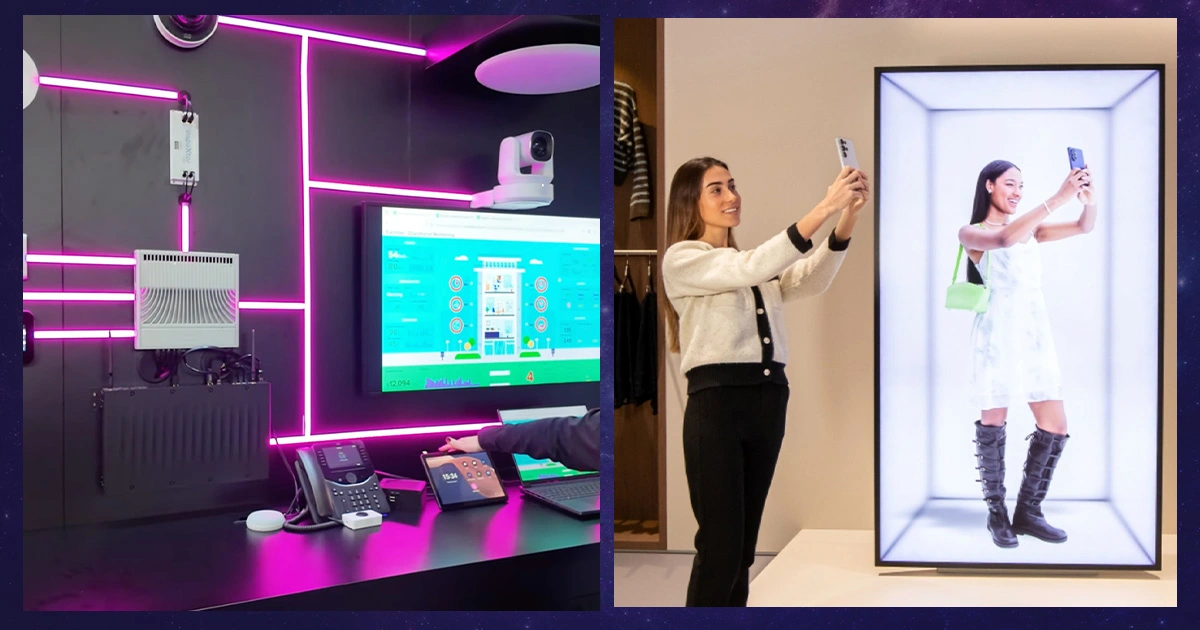
Cisco’s ISE 2026 showcase focused on transforming collaboration and workplace experiences with AI‑powered devices, connected intelligence, and immersive collaboration tools. Attendees experienced hands‑on demos of cinematic meetings, smart building technologies, and advanced workspace solutions — including devices designed to elevate hybrid collaboration and integrated AV communication in modern workspaces.
Samsung made waves at ISE 2026 with the global launch of its glasses‑free 3D Spatial Signage — redefining immersive commercial displays with ultra‑thin form factors and AI‑enhanced content tools. In collaboration with partners like Cisco, Samsung showcased its ultra‑large certified LED displays optimized for enterprise collaboration and meeting room integration, underscoring the blending of display innovation with real‑world productivity environments.
Beyond products, partnership announcements and collaborations underscored ISE’s role in shaping industry direction. For example, strategic alliances between LED specialists and spatial audio innovators pointed toward multi-sensory, fully integrated experiences for retail, corporate, and cultural environments.
The cumulative impact of these announcements reinforces that ISE is not merely a tradeshow; it is where the future of AV, immersive experiences , and spatial storytelling is defined, giving professionals insight into emerging trends and actionable inspiration for deployment in real-world scenarios.
ISE 2026 didn’t just showcase the latest AV technology — it offered a window into where the industry is heading. Several clear trends emerged, pointing to the future of immersive experiences. AI and automation are increasingly shaping installations, from projection mapping that adapts in real time to intelligent spatial audio that responds to audience movement. Multi-sensory integration — combining visuals, sound, and even tactile elements — is becoming the standard for high-impact environments, whether in museums, live events, or retail spaces.
Another key development is accessibility and scalability: glasses-free 3D displays, compact high-performance LED solutions, and flexible modular systems are making advanced experiences more practical and cost-effective for a wider range of venues. Meanwhile, sustainability is creeping into design choices, with energy-efficient lighting, low-power displays, and adaptive systems demonstrating that immersive technology can be both impactful and environmentally conscious.
Finally, ISE highlighted the importance of community and knowledge-sharing. Beyond products, workshops, demos, and collaborative spaces reinforced the value of professional networks and education in driving innovation. Taken together, these insights show that the AV industry is evolving rapidly — toward solutions that are smarter, more interactive, and more seamlessly integrated into the environments we inhabit.
ISE 2026 once again proved why it is the ultimate global stage for innovation, creativity, and technology. Beyond the dazzling displays and high-tech launches, the event was, at its core, a celebration of experience — a reminder that the true power of AV lies in how it transforms spaces, engages the senses, and connects people. From immersive drone performances and holographic storytelling to interactive installations that turned even the smallest booths into memorable moments, every corner of the exhibition emphasized that technology is most impactful when it is felt, explored, and lived.
For attendees, ISE was more than a trade show; it was an experiential journey through the future of audiovisual integration. The lessons learned, ideas sparked, and collaborations formed in Barcelona will ripple across industries, influencing everything from cultural landmarks and corporate spaces to entertainment venues and educational environments. In demonstrating the potential of integrated, multi-sensory experiences, ISE 2026 reinforced a vital truth: innovation is not measured by gadgets alone, but by the memorable , human-centered experiences it creates. As the global AV community returns home, inspired and energized, one thing is certain — the future of immersive technology is not just on display at ISE; it is m eant to be experienced.
Website | LinkedIn | Instagram | YouTube | Facebook