
16-02-2026
How the Olympics Turned Opening Ceremonies into Immersive Global Shows ...


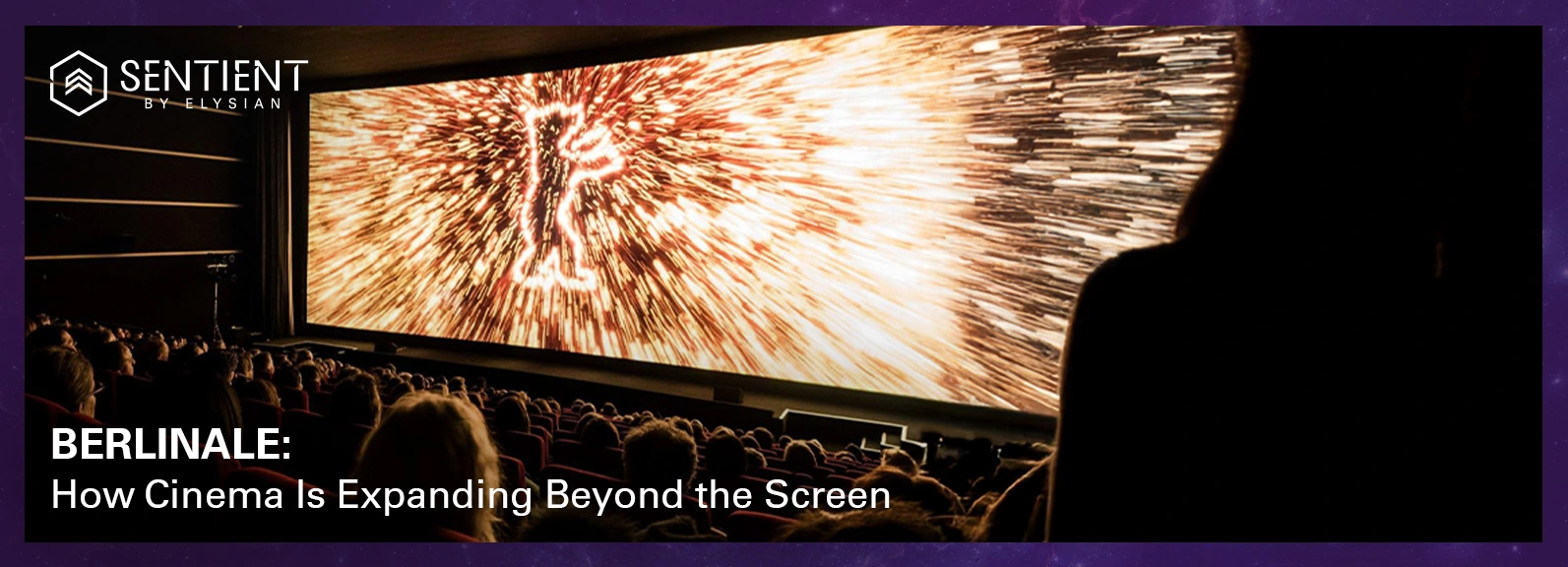
Berlinale 2026 marked a defining moment in cinema’s evolution, expanding storytelling beyond the traditional screen into immersive, participatory realms. From Forum Expanded’s politically charged installations and groundbreaking video game debut to the European Film Market’s fully booked Immersive Zone, the festival showcased how film is transforming into spatial, interactive experience. Alongside these innovations, award-winning films like Yellow Letters reaffirmed Berlinale’s commitment to cinematic excellence. Set against a backdrop of cultural debate and institutional scrutiny, the 76th edition demonstrated that cinema is not fading—it is adapting,
Forum Expanded – “Unauthorised Versions”
EFM’s Immersive Zone & Cross-Media Future
Viral Immersions & Audience Impact
Sentient By Elysian & Experiential Innovation
Culture & Politics Under the Spotlight
In the frost-kissed heart of Berlin, where winter light fractures across the city's storied streets, the 76th Berlinale unfurled like a living dream—cinema no longer content to merely unfold on silver screens, but bursting forth to envelop, challenge, and seduce the senses. From February 13 to 23, 2026 , the festival transcended its storied legacy, embracing a bold metamorphosis: stories that leap from projection to interaction, from observation to immersion, pulling audiences into realms where history rewrites itself, myths pulse through analog flickers, and virtual worlds reclaim forgotten narratives with defiant grace.
This article dives into the festival's most viral moments, explores the groundbreaking immersive zones, and reveals exactly what made this year's Berlinale an absolute triumph!
At the heart of Berlinale 2026's immersive revolution stood Forum Expanded , the festival's long-standing laboratory for pushing cinema's boundaries. Titled “Unauthorised Versions” , this 21st edition gathered 33 works from 31 countries—films, video installations, performances, and, for the first time ever, a video game—curated by Ulrich Ziemons, Karina Griffith, and Shai Heredia. The programme zeroed in on gaps in official histories, counter-narratives, and acts of revision, inviting audiences to confront how individuals and states shape (and erase) memory.
Held primarily at silent green’s Betonhalle, these pieces transformed passive viewing into active engagement: visitors moved through spaces, reflected on omitted stories, and even played roles in resistance. No longer mere spectators, audiences became participants in rewriting the past.
The standout spectacle? Land Invaders by Cassandra Gardiner (Anishinaabe-Algonquin) and Juan Mateo Menendez—a groundbreaking 8-bit arcade game that flipped the classic Space Invaders . Instead of defending Earth from aliens, players defend Turtle Island (North America) by stopping Christopher Columbus's ships from landing. This anti-colonial twist proved cathartic for Gardiner and wildly viral among attendees, who shared gameplay clips and debated its politics. Paired with the panel “Augmenting Histories: Indigenous Approaches to XR Media Art ” , it spotlighted Indigenous voices using immersive tech for reclamation.
Another highlight was the expanded cinema performance Born of the Yam by Singaporean duo Mark Chua and Lam Li Shuen. Using hand-processed 16mm film, feedback loops, noise, and multiple projectors, they staged a ritual honoring a demigod born from a yam root. The result was a "screen-busting" sensory overload that shattered traditional cinema boundaries, turning the venue into a pulsating stage of myth and materiality.
Other notable installations included Laurence Favre's fragile multi-channel Butterfly Stories: Malaise II , unarchiving natural history through layered butterflies, and Riar Rizaldi's delirious Fanfictie: Volcanology , plunging viewers into a zombie-geologist's volcanic underworld. These works demanded physical presence and intellectual resistance, fostering self-reflection and remembrance.
Forum Expanded 2026 didn't just exhibit art—it staged a quiet uprising against authorized histories, proving expanded cinema's power to make the invisible felt and the forgotten fiercely present.
The most tangible sign of Berlinale 2026's immersive future arrived at the European Film Market (EFM) with the debut of the Immersive Zone —a compact, curated XR/VR showroom tucked into the Innovation Hub on the second floor of Gropius Bau. Supported by Medienboard Berlin-Brandenburg, this new addition transformed part of the market into a hands-on discovery space: four VR stations ran fully booked 60-minute sessions throughout February 12–18, drawing producers, buyers, and decision-makers eager to experience XR storytelling in a structured, market-oriented format.
Unlike casual festival VR corners, the Immersive Zone operated like classic screenings—visitors booked slots for efficient, comparable encounters with a carefully selected slate of projects emphasizing narrative strength, artistic quality, production value, and viable business models. Complementing the showroom were targeted workshops on expanding film IPs into immersive formats, part of the broader EFM Beyond cluster that bridged film, animation, gaming, and XR for portfolio-driven, cross-media development.
Standout projects included EDDIE AND I and The sad story of the Little Mouse (from Reynard Films GmbH), which ran in the zone February 12–15 and highlighted spatial audio and emotional, character-driven VR narratives—earning praise for pushing storytelling beyond flat screen s. These experiences exemplified the zone's focus: turning one-off films into expandable universes with new revenue potential through games, XR extensions, and branded content.
The Immersive Zone's instant success—constant queues and sold-out slots—signaled industry hunger for these formats. Producers left convinced that future stories aren't single-medium; they're worlds to inhabit across platforms. By blending curation, technology demos, and IP strategy talks, the zone didn't just showcase immersion—it built the practical blueprint for cinema's next economic and creative chapter, proving Berlinale 2026 was where film markets met the multiverse.
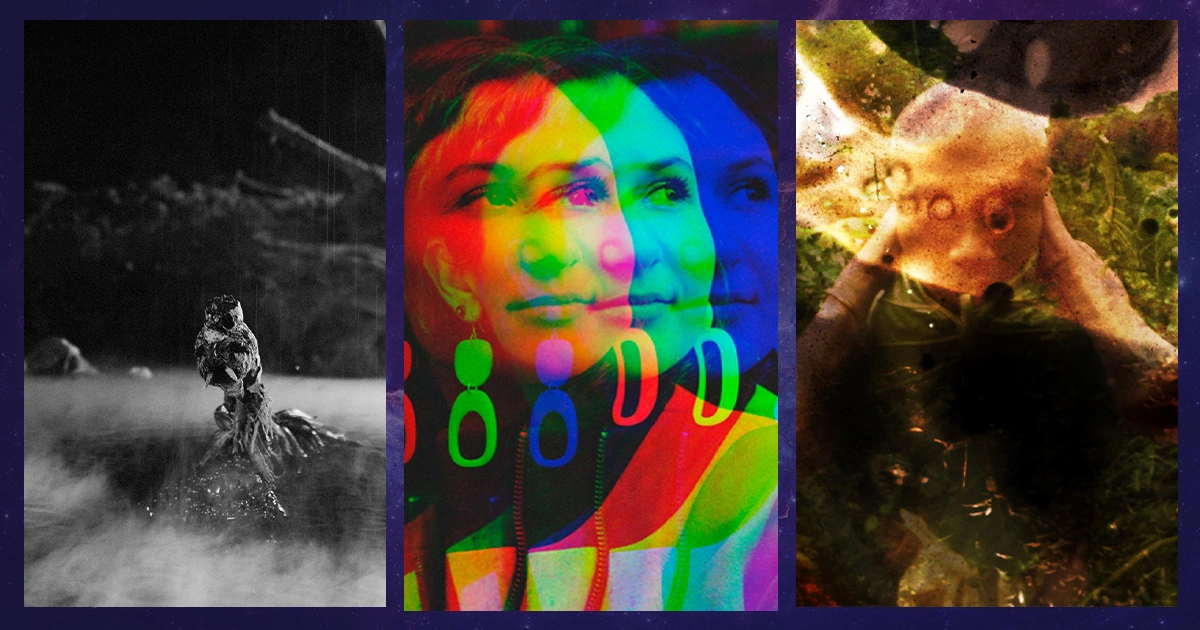
Berlinale 2026's immersive offerings weren't just innovative—they generated real buzz, with viral clips, packed queues, and emotional testimonials flooding social media. Here's a spotlight on the most talked-about moments that turned passive viewers into active participants:
These highlights proved irresistible for virality: short gameplay footage from Land Invaders , 360° reactions to performances, and heartfelt "I lived the story" stories. They amplified Berlinale's shift—cinema that doesn't just screen, but ignites shares, empathy, and conversation long after the festival ends.
Inspired by such grandeur and winning hearts worldwide, Sentient By Elysian , a UAE-based event agency, continually pushes boundaries to explore innovative experiences. They are redefining how festivals and cultural events are perceived—transforming spaces into fully sensory stages rather than passive viewing areas. Whether it’s installing the gigantic immersive towers at UNTOLD Dubai , turning exhibitions like Cloud Solutions at GHE 2025 into major highlights, or experimenting to create never-before-seen technology sculptures, they remain at the forefront of creating unforgettable, experiential moments.
Amid the immersive revolutions and experimental showcases, the 76th Berlinale’s main competition delivered a slate of cinematic achievements that anchored the festival in its core mission: celebrating outstanding film artistry.
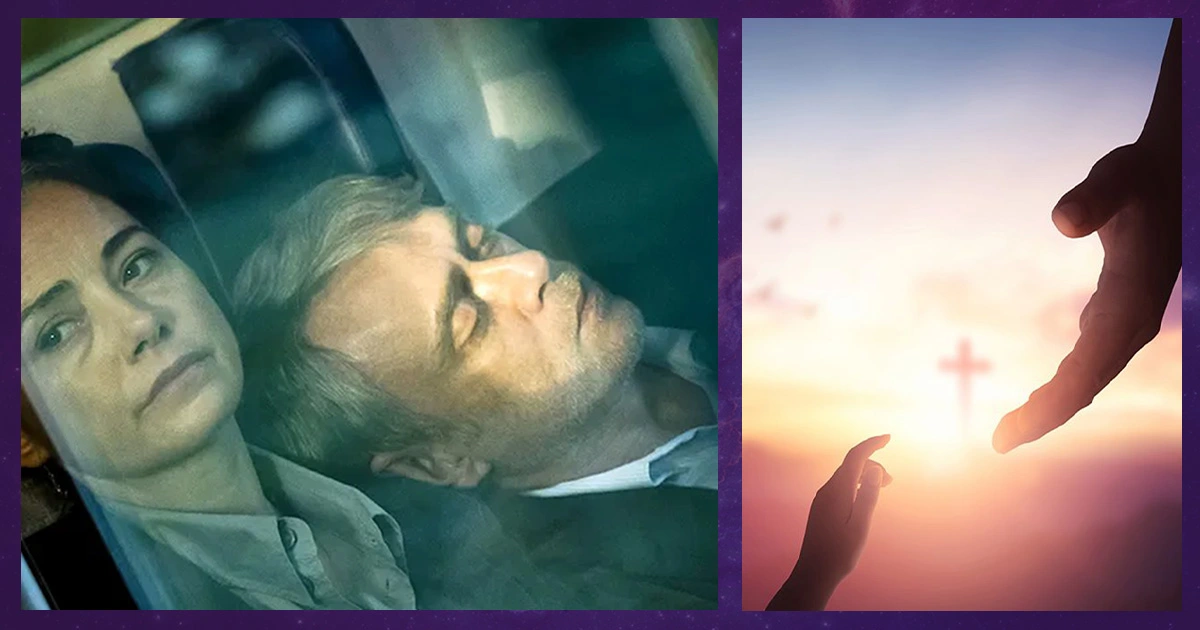
At the top of the awards, Yellow Letters , directed by Turkish‑German filmmaker İlker Çatak , won the Golden Bear for Best Film — a politically resonant drama exploring personal and artistic repression under authoritarian pressure that dominated headlines at the closing ceremony.
The Silver Bear Grand Jury Prize went to Salvation , the latest work from acclaimed T urkish director Emin Alper , praised for its raw and complex examination of violence and power. Meanwhile, Queen at Sea , a moving drama featuring performances from Juliette Binoche and the veteran pairing of Anna Calder‑Marshall and Tom Courtenay, earned the Silver Bear Jury Prize and acting honours for Calder‑Marshall and Courtenay alike.
In acting and craft categories , Sandra Hüller was awarded the Silver Bear for Best Leading Performance for her haunting role in Rose , a historical drama that quickly became a critical talking point. Geneviève Dulude‑de Celles won the Silver Bear for Best Screenplay for Nina Roza , while Anna Fitch and Banker White received the Silver Bear for Outstanding Artistic Contribution for the documentary Yo (Love Is a Rebellious Bird) , spotlighting innovative documentary form and artistic collaboration.
The festival also opened with Director Shahrbanoo Sadat’s No Good Men , a German‑Afghan drama that set the tone for a politically and culturally dynamic edition, and recognized rising voices such as Palestinian director Abdallah Al‑Khatib with the Best First Feature Award in the Perspectives section.
This convergence of award‑winning narrative cinema and immersive media underscored Berlinale 2026’s dual identity as both a site for avant‑garde innovation and a premier showcase of world filmmaking.
If Berlinale 2026 expanded cinema formally, it also unfolded within a charged cultural climate. Germany’s cultural sector has, over the past few years, faced intensified debates around funding ethics, artistic freedom, and the boundaries of public discourse. The festival did not exist outside these tensions; it absorbed and reflected them.
Culturally, this year’s edition felt marked by a heightened sensitivity to representation and voice. Questions of who is invited, who is platformed, and who is funded hovered in the background of programming decisions. Conversations in foyers and panel rooms often extended beyond aesthetics into institutional responsibility. The festival space became a site where global artistic exchange met national cultural policy, sometimes uneasily.
Separately—and more overtly—politics cast its own shadow . Public statements by filmmakers, open letters circulating among artists, and media scrutiny around particular selections generated friction. In some cases, works sparked debate before audiences even encountered them. The controversy was not always about the content itself, but about context: the symbolism of inclusion, the optics of endorsement, the pressures placed on cultural institutions in polarized times.
What made this moment distinct was not scandal for its own sake, but the visibility of the negotiation. Berlinale appeared acutely aware of its dual role: an international showcase of art and a publicly funded German institution accountable to shifting political realities. Balancing those identities required careful calibration.
In this sense, the festival’s expansion beyond the screen was mirrored by an expansion of scrutiny. Cinema was not the only thing on display; the institution itself was being watched, questioned, and interpreted. Berlinale 2026 became a reminder that major festivals are never purely artistic arenas—they are cultural actors operating within political landscapes, where every curatorial gesture resonates beyond the projection beam.
By the time the final awards were handed out and the winter lights dimmed over Potsdamer Platz, Berlinale 2026 had made something unmistakably clear: cinema is not shrinking in the age of technological acceleration — it is mutating, expanding, and rediscovering its pulse in new dimensions. What unfolded over ten days in Berlin was not a departure from film culture, but an amplification of it.
From gallery spaces that demanded physical navigation to VR environments that dissolved the boundary between observer and protagonist, from politically charged debates to award-winning narrative triumphs, the festival demonstrated that cinema’s evolution is not a rejection of tradition — it is a widening of its vocabulary. The Golden Bear winners and celebrated performances reaffirmed the enduring power of storytelling and craft, even as immersive works redefined how those stories could be experienced.
Crucially, Berlinale did not position innovation as spectacle for spectacle’s sake. Instead, it framed immersion as an extension of cinema’s oldest ambition: to make audiences feel present inside a world not their own. The tools may have changed — projectors now share space with headsets, game engines, live circuitry, and spatial sound — but the intention remains timeless.
We can rightly say that if past festivals asked us to watch the future unfold, Berlinale 2026 invited us to step inside it.
Website | LinkedIn | Instagram | YouTube | Facebook