
16-02-2026
How the Olympics Turned Opening Ceremonies into Immersive Global Shows ...


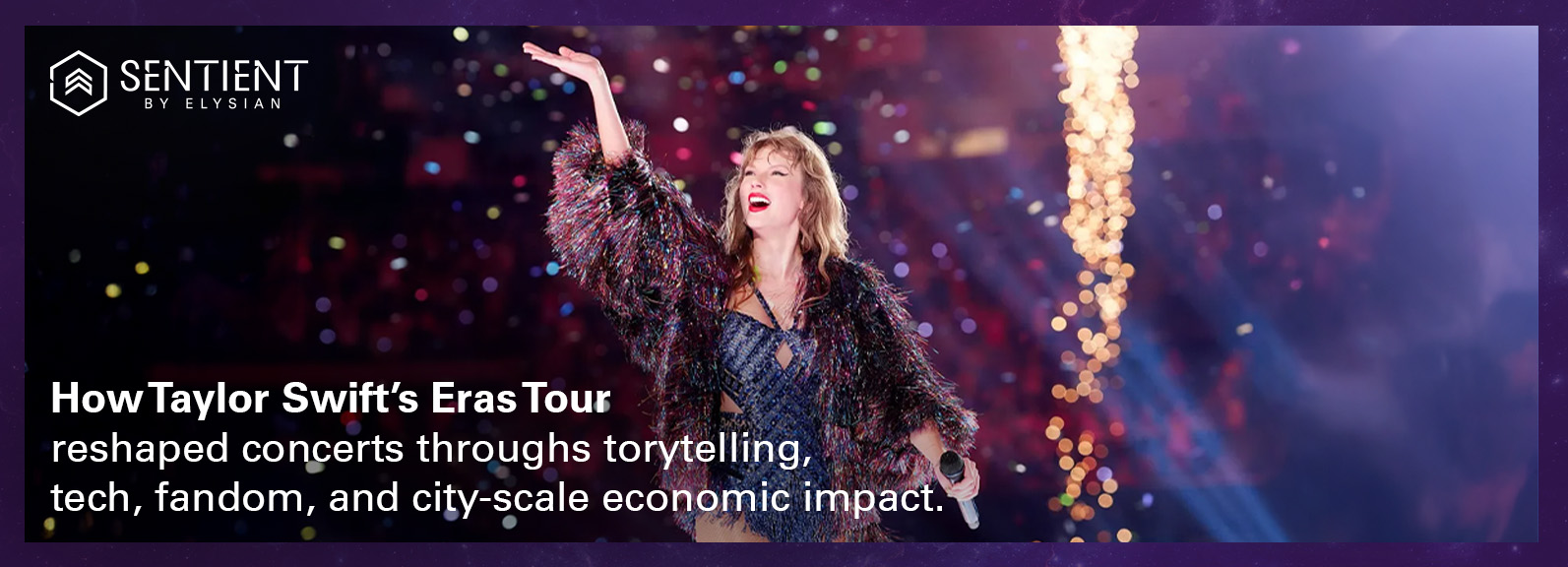
Taylor Swift’s Eras Tour marked a turning point in live entertainment, transforming concerts into fully immersive cultural systems. Built on era-based storytelling, synchronized technology, and deeply participatory fan rituals, the tour blurred the line between performance and audience. Its impact extended far beyond stadiums, driving travel demand, reshaping city economies, and drawing attention from governments and tourism boards worldwide. More than a musical success, the Eras Tour established a new blueprint for global touring—one where narrative, technology, fandom, and economics operate as a unified experience, redefining what audiences now expect from live events.
Fan Rituals and Collective Participation
Swiftonomics and City-Scale Impact
The Blueprint Effect on Global Touring
Beyond Music: A Cultural Force
This wasn’t a concert. It was a takeover. When Taylor Swift launched the Eras Tour , she didn’t just sell out stadiums — she hijacked cities, broke economic models, rewired fan behavior, and reminded the live-music industry who’s really in charge. For three-plus hours, fans didn’t attend a show; they stepped into a multiverse of Taylor’s making, complete with costume changes, emotional whiplash, LED-powered spectacle, and rituals so intense they felt ceremonial. The Eras Tour turned pop performance into an immersive, all-consuming experience — and in the process, redefined what live entertainment can, should, and now must be.
This article covers how storytelling, technology, fandom, money, and even governments got pulled into the Swift vortex — and why the Eras Tour is now the blueprint everyone else is scrambling to copy.
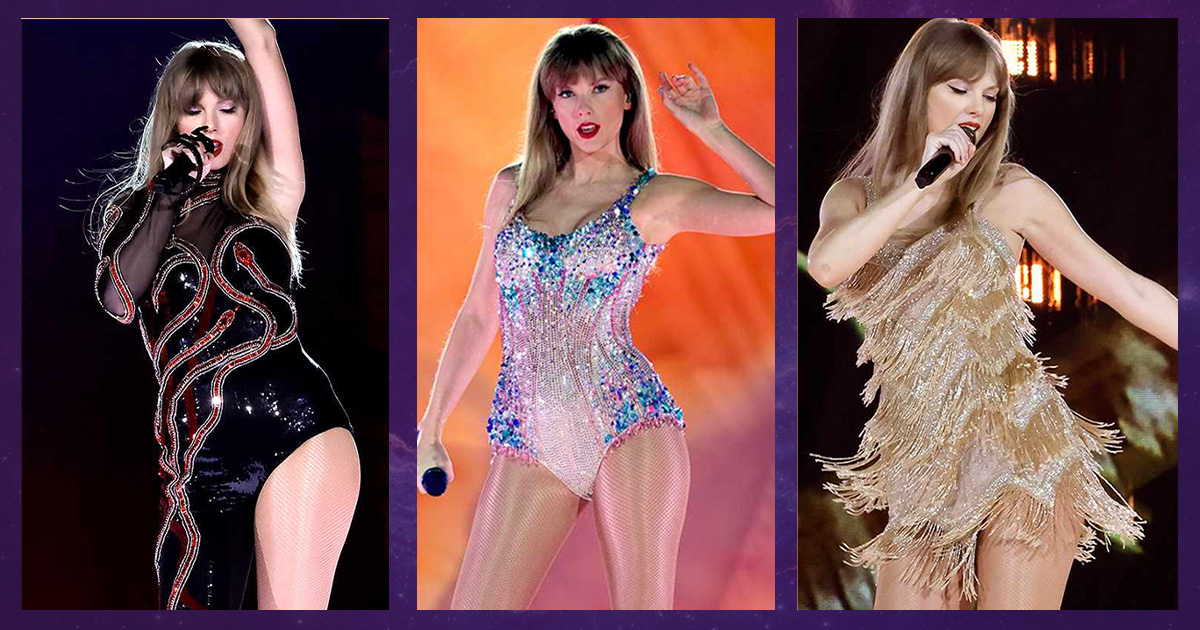
The Eras Tour didn’t just tell a story — it trained audiences to move through it . Each era arrived with instantly recognizable visual cues: pastel gowns and heart-hands for Lover , cottagecore dresses and mossy tones for folklore , razor-sharp blacks and reds for Reputation . Fans didn’t wait to be instructed; they reacted on instinct. Entire stadiums shifted mood in real time, proving that the audience wasn’t just watching the narrative — they were fluent in it.
Several moments went unmistakably viral because of this shared literacy. The surprise songs segment, where Swift performs two different songs each night, turned every show into a high-stakes event. Fans tracked setlists city by city, live-streamed reactions, and treated each performance like a once-only artifact. This alone changed fan behavior: people who had already attended shows bought tickets again just to experience a different narrative combination.
Then there was “ champagne problems. ” Swift pauses as the crowd delivers prolonged, deafening applause — sometimes lasting minutes . The moment wasn’t choreographed, but it became ritualized. Fans knew when to clap, how long to sustain it, and why it mattered emotionally. The audience effectively wrote itself into the show.
Even transitions became cultural touchpoints. The dive into the stage before Midnights — instantly meme-ified — wasn’t a gimmick; it functioned as a visual metaphor for closing one chapter and entering another. Fans anticipated it like a plot twist, phones ready, timing memorized.
What changed most was the role of the attendee. Fans arrived costumed by era, emotionally primed, and socially coordinated. They weren’t consumers of a setlist; they were participants in a serialized universe. The Eras Tour demonstrated that when an artist commits fully to narrative coherence, the audience doesn’t just follow — it synchronizes.
And once that happens, the concert stops being an event and starts behaving like a cultural system.
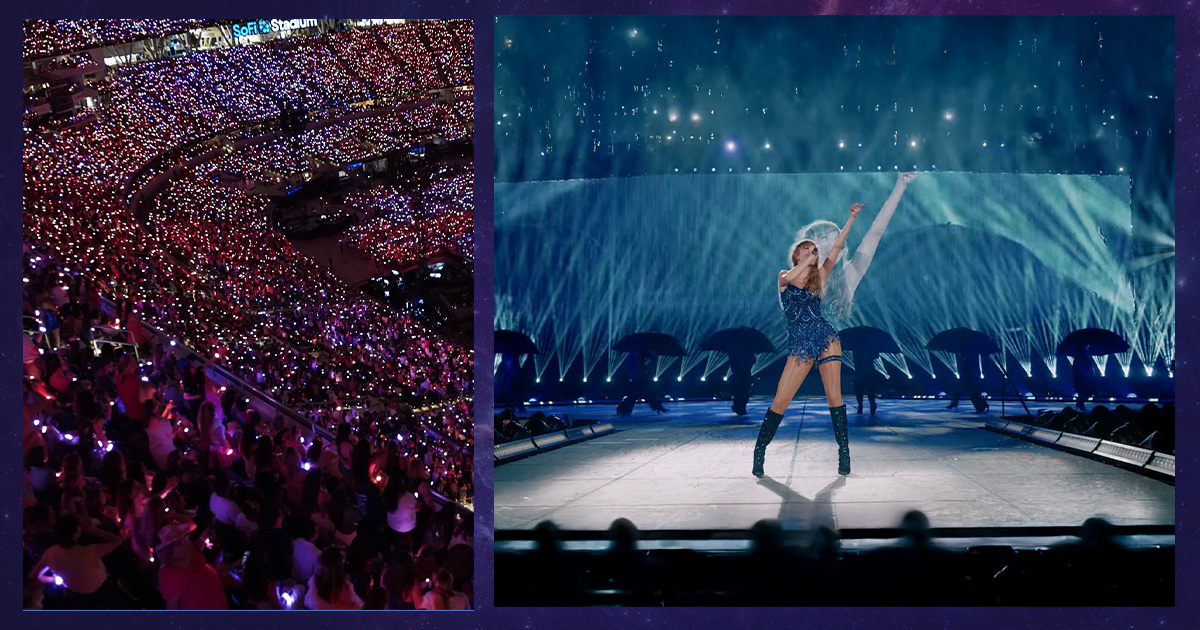
Technology drove the rhythm and scale of the Eras Tour experience. From the first notes to the final bow, stadiums pulsed, shifted, and reacted as if they were alive — because, in a way, they were. Tens of thousands of fans wearing synchronized LED wristbands became part of the lighting design, transforming entire crowds into moving, color-coded visuals that changed with each era.
This wasn’t new technology, but it was used with unusual narrative precision. Colors aligned with emotional beats, not just choruses. During Reputation , the stadium glowed in aggressive reds and blacks; folklore softened the environment into muted, atmospheric tones. The result was a fully immersive environment where fans didn’t just watch lighting effects — they were the lighting effects.
The stage itself functioned like a piece of kinetic architecture. A runway long enough to reach deep into the crowd collapsed the distance between performer and audience, while multiple lifts, trap doors, and moving platforms allowed Swift to appear, vanish, and reemerge as if passing between worlds. The now-viral dive into the stage before Midnights wasn’t just spectacle; it was a visual transition cue, signaling the close of one chapter and the start of another.
What truly shifted was audience behavior. Fans timed their reactions to lighting changes, anticipated visual cues, and coordinated filming moments with near-military precision. Certain songs triggered automatic phone raises, synchronized chants, or total silence — a collective understanding built through repetition and online circulation.
In this environment, technology didn’t distract from the performance; it trained the audience to move in rhythm with it. The Eras Tour proved that when tech is integrated into storytelling, it doesn’t overwhelm the human experience — it amplifies it, making 70,000 people feel like a single, responsive organism. And once audiences experience that level of immersion, going back to static stages feels almost… unthinkable.
Just as Taylor Swift turned a concert into an emotional universe, Sentient By Elysian (SBE) , a UAE-based creative agency, is turning spaces into living brand experiences that don’t just dazzle — they communicate . By blending cutting-edge tech like AR/VR, interactive installations, kinetic displays, and bespoke multimedia storytelling, SBE crafts environments where audiences feel seen and engaged , not just spectators. Whether it’s a futuristic exhibition, a branded activation, or immersive content , their work ensures that every sensory element reinforces a clear brand message — making the experience unforgettable and unmistakably aligned with what the brand stands for.
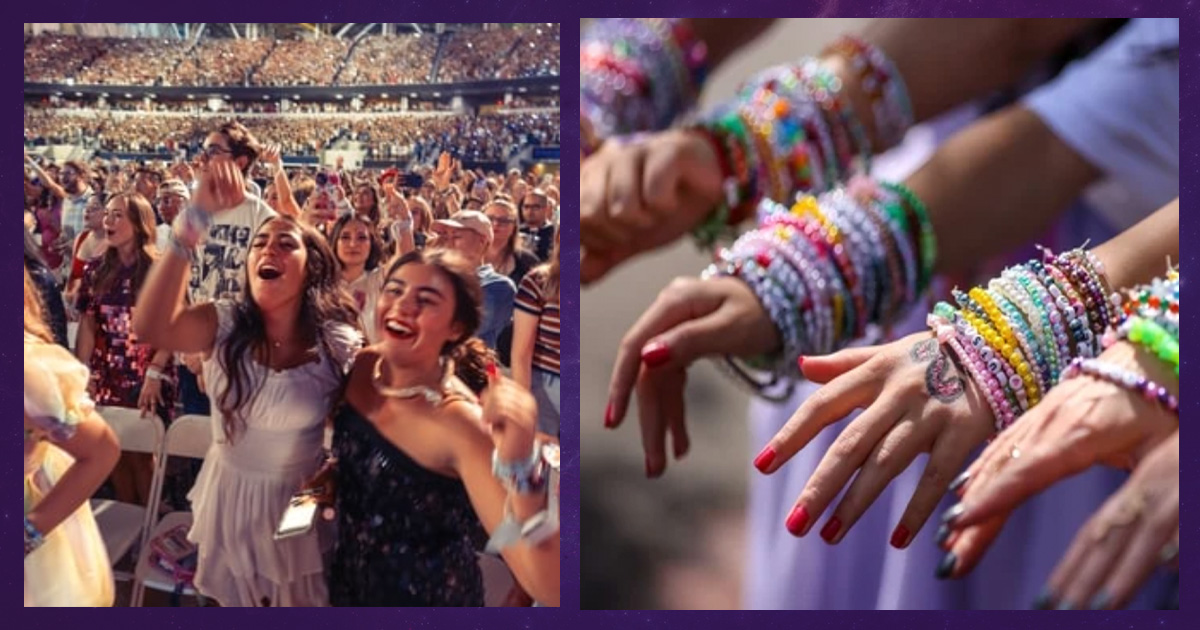
The Eras Tour didn’t just attract fans — it activated them. Attendance became intentional and performative. Fans arrived dressed by era, exchanged handmade friendship bracelets, and treated outfit planning as part of the experience itself. Showing up wasn’t passive; it was participation.
Certain moments quickly became standardized across cities. The prolonged standing ovation during “champagne problems” evolved into a shared ritual, repeated night after night. It wasn’t scripted, but it was understood. Audiences knew when to erupt, how long to sustain it, and what it represented: collective recognition and emotional release. In that moment, the crowd wasn’t reacting — it was communicating.
Social media accelerated this behavior. Surprise-song performances were dissected in real time, reactions went viral within minutes, and fans tracked setlists across cities as if following a live series. Even those without tickets engaged daily, reinforcing the tour’s momentum and expanding its cultural footprint beyond the venue.
Fan behavior also shifted structurally. Many attendees traveled across cities or countries to attend multiple shows . Multi-generational audiences became common, with parents and children sharing a cultural reference point. Inside the stadium, learned norms emerged: silence during intimate songs, synchronized chants during others. These weren’t instructed; they were socially enforced.
The result was a rare inversion of the live-music dynamic. The Eras Tour wasn’t driven solely by production or performance — it relied on mass coordination among fans. The audience became a system: self-organizing, emotionally fluent, and globally connected. And once fans operate at that level, a concert stops being a one-night event and starts functioning like a cultural movement.
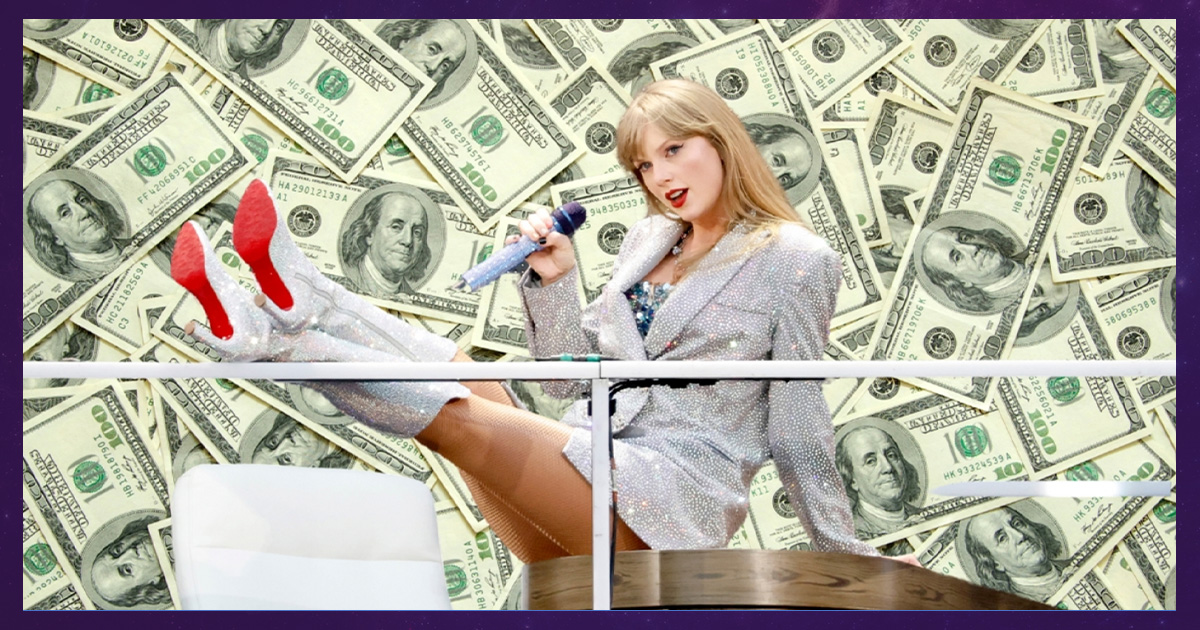
The Eras Tour rerouted cash flow across cities on a scale rarely seen in live entertainment. Hotels filled up months in advance, flight prices skyrocketed, restaurants extended their hours, and local transportation systems felt the surge. At multiple tour stops, hospitality revenue increased so noticeably that economists and city officials began tracking its impact in real-time. This wasn’t fan hype; it was measurable economic activity triggered by a single cultural event.
What made this different from a typical blockbuster tour was duration and density. Swift played multiple nights in the same city, effectively creating temporary tourism seasons. Fans didn’t just attend a concert — they booked weekend stays, flew internationally, planned outfits, dined out, and shopped locally. For many cities, the Eras Tour behaved less like a music event and more like a global convention with a built-in audience.
Governments noticed. Tourism boards openly promoted tour dates as travel opportunities, while local officials referenced Swift’s arrival in economic briefings and public statements. In some cases, city branding leaned into the moment — welcoming Swifties, lighting landmarks, and aligning local marketing with the tour’s cultural energy. A pop star became, briefly, a municipal asset.
The ripple effects extended beyond hospitality. Merchandise sales reached industrial scale, resale markets flourished, and even unrelated sectors — from fashion to beauty to transport — saw demand spikes tied directly to show dates. The term “ Swiftonomics ” didn’t emerge as a joke; it stuck because it described a repeatable pattern.
Most importantly, the Eras Tour reframed how value is measured in live entertainment. Success was no longer confined to ticket revenue or chart performance. Cultural pull, audience mobility, and economic spillover became part of the equation. Taylor Swift didn’t just headline stadiums — she activated ecosystems.
And once a tour proves it can move cities, the conversation shifts from “Can we book this artist?” to “What happens if we don’t?”
After the Eras Tour, the bar moved — and it didn’t move quietly. Artists, promoters, and production teams began reassessing what a “global tour” is supposed to deliver. A strong setlist was no longer enough. Audiences now expect structure, immersion, and intention. The Eras Tour introduced a touring model where narrative, technology, and audience participation operate as a single system rather than separate add-ons.
One of the most visible shifts is scale with purpose. Multi-hour shows, once considered risky, are now seen as viable when anchored in storytelling. Tours are increasingly designed as chapters or acts, not collections of hits. Visual identity, pacing, and transitions matter as much as song choice. The concert becomes a journey, not a playlist.
Production investment has also changed. Promoters are prioritizing modular stages, advanced lighting systems, and synchronized audience tech that can adapt across cities while maintaining a consistent experience. This has raised expectations not only for pop tours, but for legacy artists, festivals, and even non-music events that now compete for the same attention economy.
Another shift lies in city engagement. Tours are planned with longer residencies, fewer cities, and higher impact per stop — maximizing demand while increasing local economic and cultural visibility. This model favors depth over breadth and encourages closer collaboration with venues, sponsors, and tourism bodies.
Perhaps most importantly, the Eras Tour reframed audience value. Fans are no longer treated as ticket buyers alone, but as participants who amplify, document, and extend the experience far beyond the venue. That visibility feeds directly into brand partnerships, media coverage, and long-term cultural relevance.
The result is a new touring playbook. One that treats live performance as a hybrid of entertainment, storytelling, infrastructure, and economy. The Eras Tour didn’t invent immersive touring — but it proved, at undeniable scale, that this is now the standard others will be judged against.
The Eras Tour marked a shift in how live entertainment functions in the real world . It showed that a tour can operate simultaneously as art, infrastructure, media engine, and economic catalyst . Music was the entry point, but the impact extended far beyond sound — into how cities plan, how brands engage audiences, and how fans assign value to presence and participation.
What made this moment stick wasn’t novelty. It was coordination at scale. Storytelling aligned with technology. Fans moved as a collective. Cities responded with policy attention. The system worked because every layer reinforced the other. Remove one, and the effect weakens. Together, they created momentum that sustained itself across continents and cultures.
This has long-term implications. Artists now face higher expectations — not just creatively, but structurally. Promoters must think beyond ticket sales. Cities recognize that cultural events can rival traditional tourism drivers. Fans, meanwhile, have experienced what full immersion feels like — and they are unlikely to settle for less.
The Eras Tour didn’t signal the future of live entertainment; it accelerated it. It clarified what is possible when scale, intent, and audience trust converge. Whether others can replicate it remains uncertain. But the reference point is now fixed.
After this, a concert is no longer just a night out. It’s a world — and the audience expects to step fully inside.
The Eras Tour changed the rules by proving that immersion is now the baseline, not the bonus. Audiences want coherence, participation, and meaning layered into spectacle. They expect to be emotionally addressed, visually surrounded, and culturally included. Whether in music, sports, exhibitions, or brand experiences, the message is clear: scale alone no longer impresses — intention does.
Taylor Swift’s tour didn’t succeed because it was bigger. It succeeded because it was designed . And in a world where attention is scarce and loyalty is earned, that distinction makes all the difference.
Website | LinkedIn | Instagram | YouTube | Facebook