2-03-2026
Berlinale: How Cinema Is Expanding Beyond the Screen...


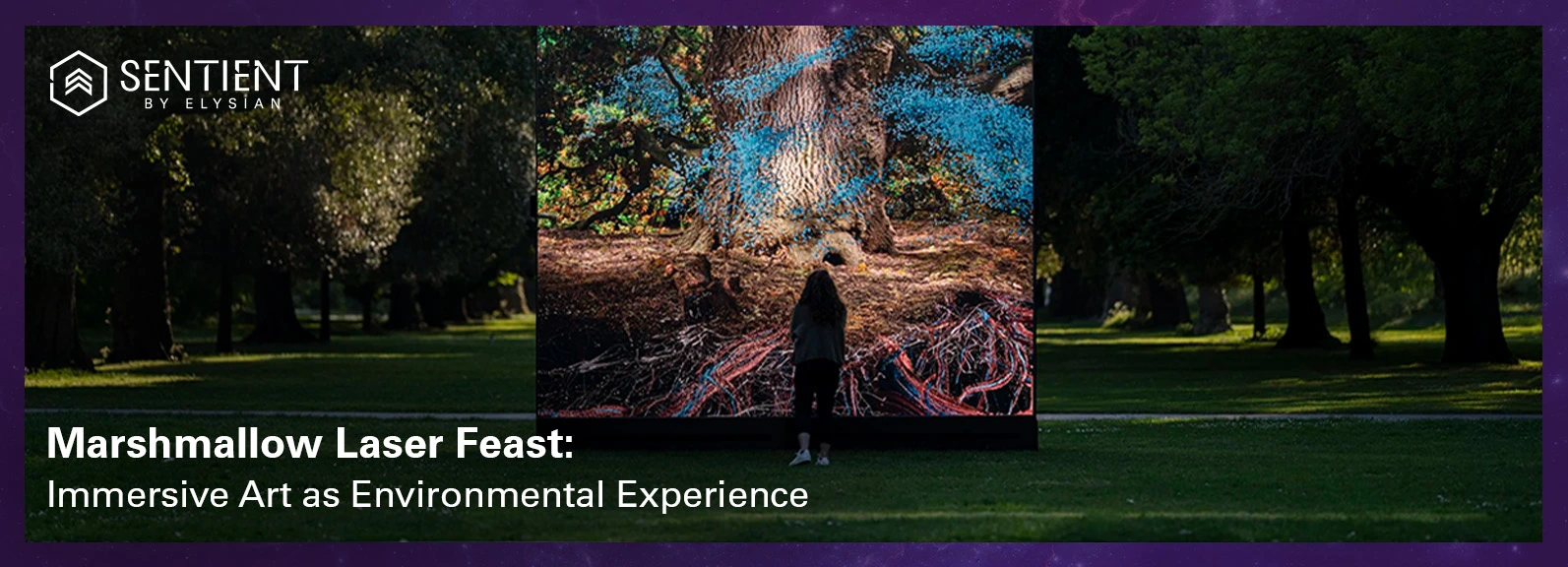
Marshmallow Laser Feast is redefining immersive art by transforming ecological research and scientific data into multisensory environments. Rather than using technology for spectacle, the London-based collective creates installations that reveal hidden systems within nature—how animals perceive landscapes, how forests circulate water, and how humans remain biologically connected to the natural world. Through virtual reality, spatial sound, and data-driven visualizations, their work allows audiences to physically inhabit these processes. The result is a form of environmental storytelling where science becomes experience. By blending art, technology, and ecology, Marshmallow Laser Feast demonstrates how immersive media can cultivate deeper awareness of the interconnected systems sustaining life.
Turning Scientific Data into Living Environments
Forests, Breath, and the Hidden Systems of Life
Designing Total Sensory Worlds
Across museums and festivals, art is no longer content to stay on the wall. Entire rooms now pulse with sound, light, and data, inviting audiences to step inside living environments rather than simply observe them. Among the artists pushing this shift further is the London-based collective Marshmallow Laser Feast , whose works transform scientific research and ecological systems into breathtaking sensory worlds. Forests appear to breathe, invisible networks of life suddenly glow into view, and the boundaries between body, technology, and nature begin to dissolve. Their installations turn complex environmental knowledge into experiences that feel immediate, visceral, and strangely intimate.
This article explores how Marshmallow Laser Feast turns science into sensation, how their environments reshape the way we perceive nature, and how immersive design can transform ecological awareness into something felt rather than merely understood.
At the center of Marshmallow Laser Feast’s practice lies a simple but radical question: what if humans could momentarily step outside their own senses? Much of the collective’s work attempts to disrupt the assumption that human perception represents the default way of experiencing the world. Instead, their installations invite audiences to inhabit alternative sensory perspectives—those of animals, ecosystems, or biological processes that usually remain inaccessible to human awareness.
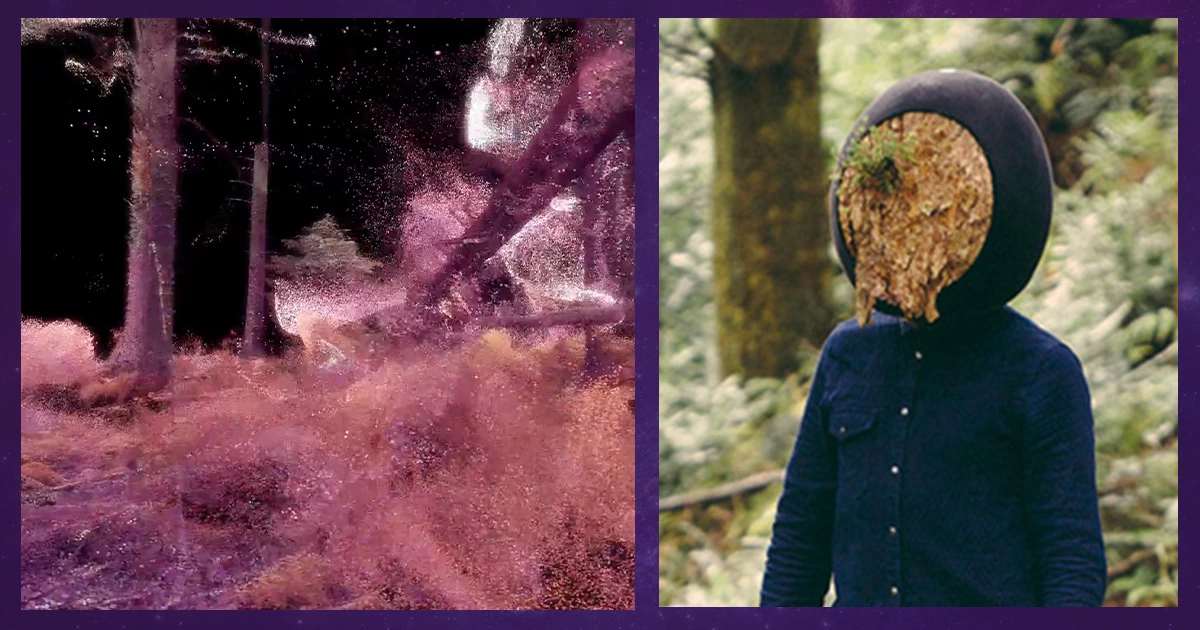
A landmark example is In the Eyes of the Animal (2015) , one of the studio’s earliest immersive virtual-reality works. Developed using LiDAR scans of woodland environments and real-time 3D rendering, the installation allows participants to explore a digital forest through the perceptual systems of different species. Viewers move through the landscape as a mosquito, a dragonfly, a frog, and an owl, each represented through altered visual fields and spatial sound that simulate the distinctive ways these animals detect their surroundings. The project draws inspiration from the concept of umwelt —a biological term introduced by zoologist Jakob von Uexküll to describe how each organism experiences a unique perceptual world.
Rather than simply presenting a visually spectacular VR environment, the work subtly destabilizes the viewer’s sensory expectations. Ultraviolet-like color palettes, heightened motion sensitivity, and shifting scales of perception remind participants that the human viewpoint represents only one among many possible experiences of the same environment.
By repositioning the audience within these non-human perceptual frameworks, Marshmallow Laser Feast transforms immersive technology into a tool for empathy. The forest ceases to appear as a static backdrop for human activity and instead becomes a dense field of overlapping sensory realities. In doing so, the installation proposes a different way of thinking about immersion—not as digital spectacle, but as a temporary reconfiguration of perception itself.
Marshmallow Laser Feast excels at translating rigorous scientific research into experiences that feel alive, tangible, and even magical. Their installations do not simply visualize data—they embody it , allowing audiences to perceive processes that are normally invisible. The collective collaborates closely with ecologists, neuroscientists, and environmental researchers, transforming measurements of respiration, airflow, and ecological cycles into immersive sensory environments.
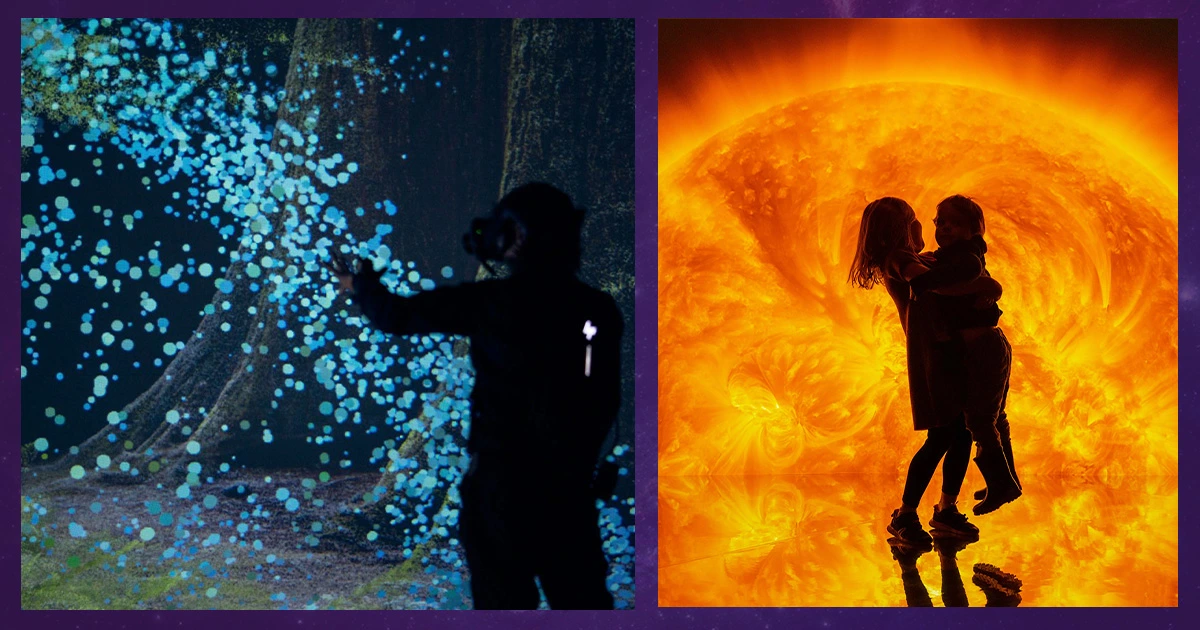
A striking example is We Live in an Ocean of Air (2018), an installation that visualizes the exchange of breath between humans and giant sequoias. Using biometric sensors, the work captures participants’ inhalations and exhalations, translating them into luminous projections that mingle with representations of the trees’ respiratory processes. The experience makes the invisible visible: audiences can literally see the continuous cycle of carbon dioxide and oxygen connecting human and plant life, bridging perception and ecological knowledge in a poetic, visceral way.
Similarly, in You Matter , the collective uses environmental and biological data to create a responsive digital ecosystem. Patterns of human interaction and movement affect projections, demonstrating the interconnectedness of individuals with broader natural systems. These installations are not about showing data as graphs or charts; they transform numeric or biological information into environments that audiences can inhabit, touch, and feel.
Through this approach, Marshmallow Laser Feast turns abstract science into an emotional, embodied understanding. Visitors leave not just informed, but viscerally aware of the hidden systems that sustain life, experiencing ecological processes as something immediate, immersive, and profoundly human—even when the perspective originates outside the human sensory range.
Trees and forests are a recurring anchor in Marshmallow Laser Feast’s work, serving as portals into the invisible networks that sustain life. Their installations reveal how forests breathe, how water travels through roots and canopies, and how interconnected ecosystems operate in ways imperceptible to the human eye. By translating these hidden processes into immersive experiences, the collective transforms visitors’ understanding of the natural world from abstract knowledge to visceral awareness.
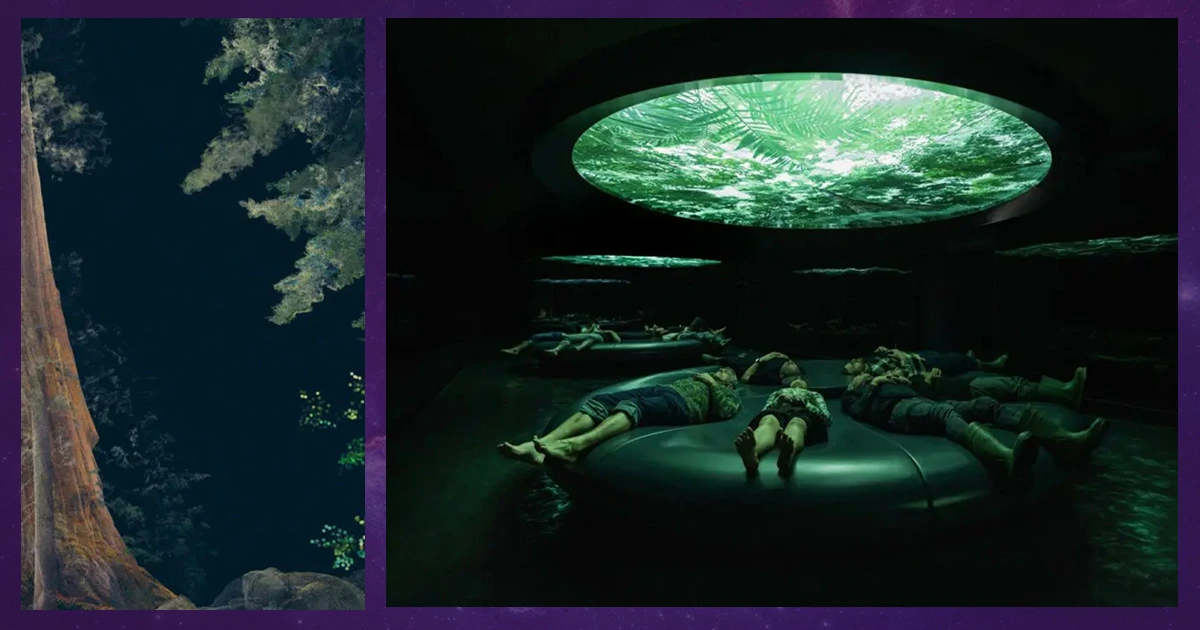
Treehugger: Wawona (2019) exemplifies this approach. Participants enter a virtual recreation of a giant sequoia in California’s Sequoia National Park, moving through its internal structures to witness the circulation of water and nutrients from roots to leaves. The environment is paired with a rich soundscape of bioacoustic recordings—birdsong, insects, wind, and rainfall—spatialized to mimic the living rhythms of the forest. Every detail, from the movement of sap to the flow of air, is rendered to convey the tree as a dynamic, interconnected system rather than a static organism.
Beyond individual trees, the collective explores broader ecological cycles. Works such as Forest Bathing immerse audiences in forest atmospheres, using light, sound, and environmental data to replicate the sensory effects of being within dense woodland. These experiences highlight respiration, water movement, and the continuous interactions between species, emphasizing that humans are part of, rather than separate from, these networks.
By focusing on forests and their subtle processes, Marshmallow Laser Feast encourages audiences to recognize the hidden life around them. The installations foster a deep ecological imagination, where the rhythms of trees and the breath of the forest are experienced as tangible, immediate, and intimately connected to human perception.
Marshmallow Laser Feast’s power lies not only in concept but in how they construct immersive environments. Their installations are meticulously designed multisensory worlds where technology, art, and biology converge to create experiences that are both intellectually rigorous and emotionally resonant. Visitors do not merely observe; they move, breathe, and interact, becoming participants within ecosystems that respond to their presence.
Spatialized sound is a cornerstone of their work. Using field recordings of forests, wildlife, and natural phenomena, the collective layers audio in three-dimensional space, allowing visitors to hear the environment as though it were alive around them. XR and VR technologies extend this effect, enabling participants to navigate intricate, data-driven environments where visual and auditory cues shift dynamically. In Works of Nature , for instance, motion sensors and interactive projections respond to human movement, translating subtle gestures into changes in light, form, and sound, making audiences aware of their impact on the systems surrounding them.
Projection architecture and tactile elements further enhance immersion. Whether simulating the internal structures of a sequoia, the path of airflow, or microscopic ecological processes, the combination of visual, auditory, and physical cues ensures that visitors perceive the environment holistically. Scientific data becomes an artistic medium, transforming abstract measurements into experiences that are felt rather than read.
Through these carefully orchestrated sensory worlds, Marshmallow Laser Feast demonstrates that technology can do more than entertain—it can cultivate presence, ecological awareness, and emotional connection. The audience becomes the interface, navigating environments that reveal life’s hidden rhythms in ways that are as poetic as they are scientifically informed.
Inspired by the immersive ethos of Marshmallow Laser Feast, Sentient By Elysian , an events agency in the UAE, explores how experiential design can transform spaces into responsive, multisensory environments. Watch their work here .
Marshmallow Laser Feast’s immersive environments do more than dazzle—they cultivate ecological empathy. By translating complex natural systems into sensory experiences, the collective helps audiences perceive the intricate relationships that sustain life and consider their own place within these networks. The impact is emotional as well as intellectual: participants leave not only more informed about ecological processes but also more attuned to the interdependence between humans and the natural world.
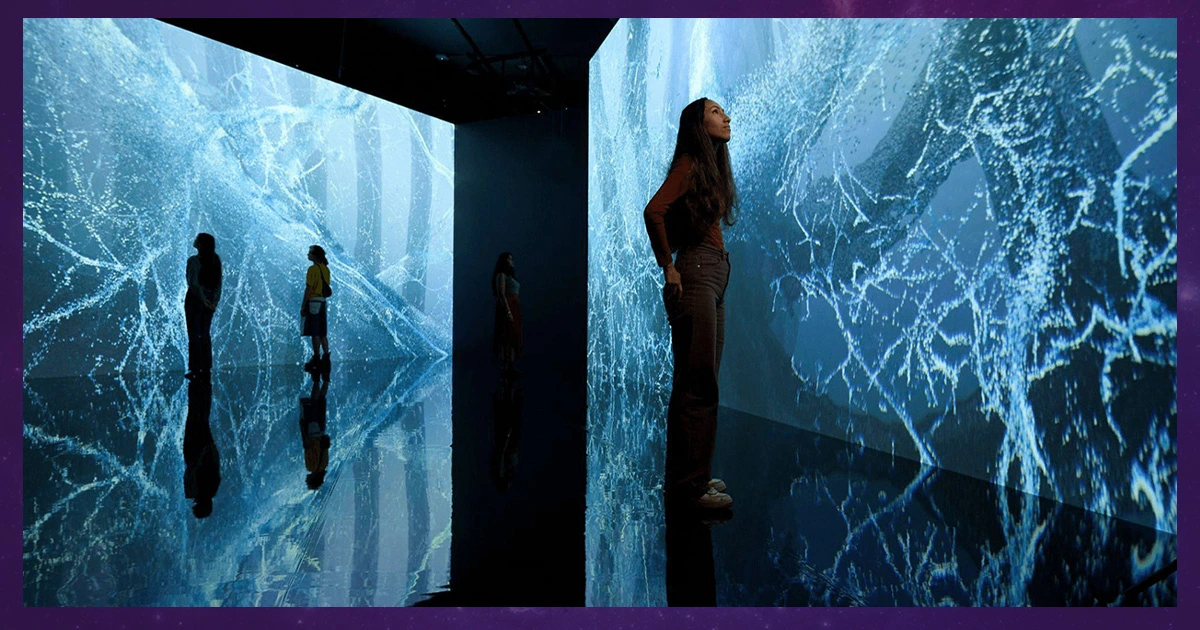
In works like The Great Animal Orchestra , the collective collaborates with bioacoustic researchers to layer recordings of biodiversity into spatialized soundscapes, allowing audiences to feel surrounded by the unseen complexity of wildlife. Similarly, Sanctuary of the Unseen Forest translates environmental data into visual and auditory cues, revealing interactions between species and the flows of energy, water, and air that keep ecosystems alive. These installations demonstrate that ecological knowledge becomes far more resonant when it is experienced bodily, rather than read or observed from a distance.
By merging art, science, and technology , Marshmallow Laser Feast transforms immersive media into a medium for environmental storytelling. The installations make invisible processes tangible, invite reflection on human impact, and foster a sense of responsibility for the living systems around us. In a cultural landscape often dominated by spectacle, the collective’s work shows that immersive art can be both an aesthetic thrill and an ecological revelation, leaving audiences not just impressed but changed in how they perceive and inhabit the natural world.
Marshmallow Laser Feast has redefined what immersive art can do. Across forests, animal perspectives, and invisible ecological systems, the collective turns scientific research into experiences that are felt, sensed, and lived, rather than merely observed. By challenging human-centered perception, visualizing hidden processes, and crafting total sensory environments, their work transforms museums and galleries into spaces of ecological reflection.
More than technology-driven spectacle, these installations foster empathy—inviting audiences to inhabit the rhythms of life around them and reconsider their relationship to the natural world. In a cultural moment defined by environmental uncertainty, Marshmallow Laser Feast demonstrates that art can bridge knowledge and feeling, science and imagination. Their immersive worlds do not simply show nature; they invite participants to become part of it, leaving a lasting impression that is intellectual, emotional, and profoundly human.
Website | LinkedIn | Instagram | YouTube | Facebook