
16-02-2026
How the Olympics Turned Opening Ceremonies into Immersive Global Shows ...


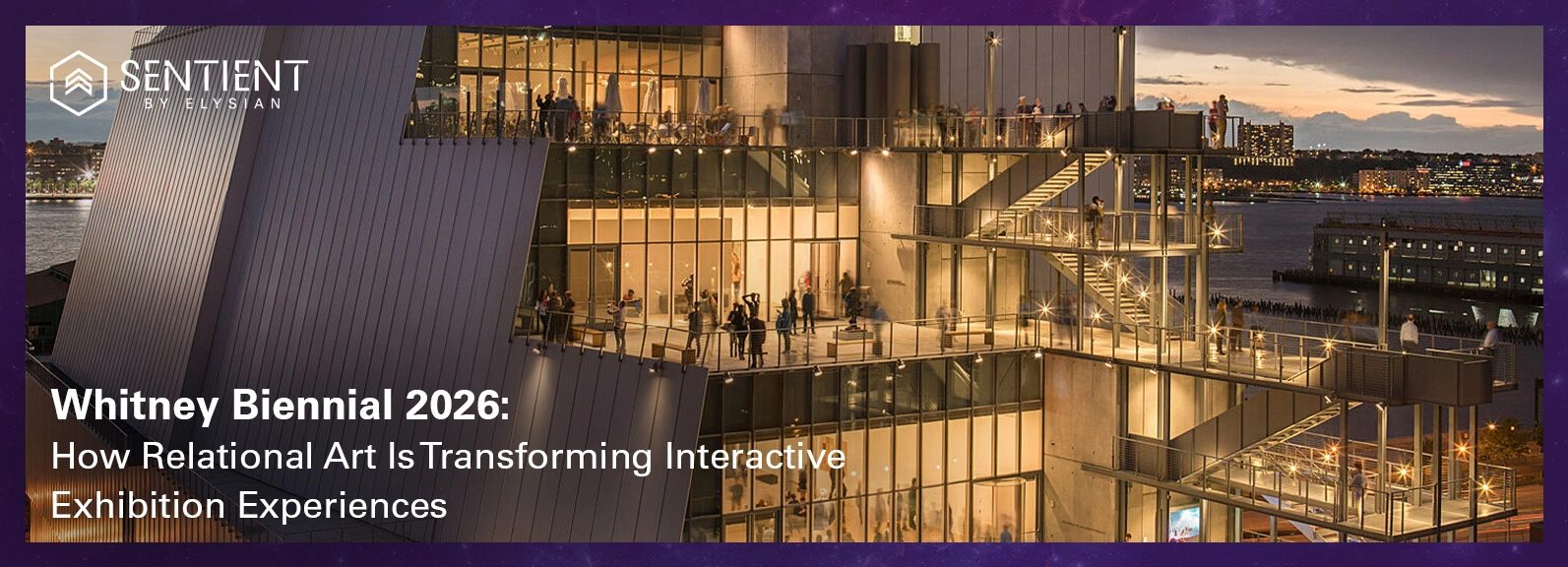
The article talks of the Whitney Museum, how they came up with the idea of exhibiting interactive artworks, and shifting from annuals to biennials. With the changing American art landscape, Whitney extended efforts to provide a platform to artists who speak through their artworks and voice strong opinions. Today, the Whitney Biennial has become one of the most-trusted art platforms among the artists of not only America but worldwide. Dive deep into what the 82nd edition of Whitney Biennial presented and how participatory art is gaining momentum, where visitors become the medium of the artist’s overall vision.
How the Whitney Biennial Gained Momentum Over the Years
Criticisms, Condemnations, Called ‘Tear Gas Biennial’
Participatory Art: Social Interstices to Messy Relationality
Colors can represent a plethora of things. Colorings, when applied to a medium, turn the fragments of imagination into a life for an artist, or rather a superficial one, leaving the onlooker to interpret it. It is indeed the “thought” that gives a canvas its existence, else it is nothing but a botched piece of work, lacking depth. Today, in an age where art is not just an expression of an artist — as it has evolved into more of a participatory art , evocative, and immersive — New York’s Whitney Biennial has become the center stage of American art. It has emerged as a catalyst, giving America a sense of “identity” in an eccentric way. We can rightly say it is indeed the Whitney Biennial, above all other art events and exhibits, that truly illustrates and, at the same time, shapes the American art world.
So, what is the conundrum encircling this particular biennial, and how has it become so celebrated in today’s era? This article explores the different layers of the Whitney Museum, the Biennial, and the rise of experiential design alongside shifts in America’s zeitgeist and artists’ responses to the current era.
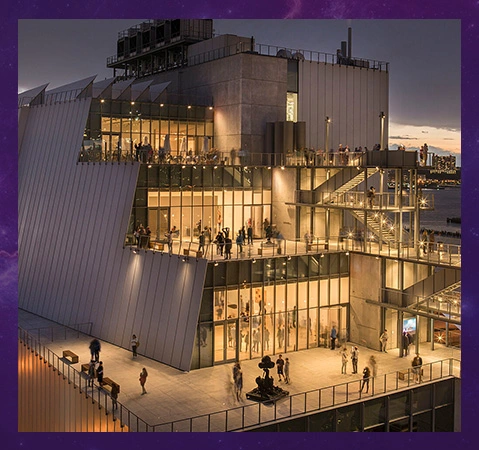
The Whitney Museum we see today originally began hosting collections in 1932, when the idea of audience engagement in exhibitions was starting to bud. It was not a biennial at the time but an annual gathering alone. Artists from all walks of life formed the annual show, carefully handpicked by the curators of the museum from time to time. The art represented showcased America in a different light, portraying realities, global problems, spreading messages, bringing cultures together, and urging one to ponder where society is leading.
As it grew in popularity and started gaining significant limelight, the Whitney Biennial became the face of American art . But, with it, came the downfall and criticisms too in between. In the late 60s’, the focus was shifted to splitting the show into two alternating exhibitions, one focusing on painting and the other on sculpture or art presented using other media. This gave way to biennial naturally in 1973, but the decision was protested by the black women artists specifically, seeking better representation at the gallery. It was thought that the museum’s shift to a biennial was a deliberate attempt to turn it into a money-making machine, allegations that artists at the time made. Those artists also contested the lack of fair representation of all races, saying that only white artists are getting recognition.
However, as they say that the pen is mightier than the sword, while less fondly remembered than past biennials, historic Annuals still helped quite many artists earn fame for their brush strokes that evoked thought. For instance, relational art or abstract expressionists such as Joan Mitchell, Robert Motherwell, and Jackson Pollock started hitting big at that point with their unconventional artworks.
As with any gallery, exhibit, or cultural event, be it the Venice Biennial, Eurovision Music Festival, Documenta, Cannes, and the like, the Whitney Biennial has come under fire time and again for its approach to artists and their representation. Some have claimed that Whitney is discriminatory and lacks diversity for keeping only white artists in the past, while others say they give more weight to men over women artists.
During the ’90s, a feminist artists’ collective called the Guerrilla Girls surveyed three editions of the Whitney Biennial. They concluded that in all of these editions, the featuring of artists was more inclined toward being either white or male, as was the norm for most galleries back then. Women got limited or barely any representation. Margaret Keane is still one of the best instances of the era when women were not given a platform, even in the field of art. She only managed to get limelight in her 50s. She, for most of her life, either displayed her artworks in basement rooms robbed of public attention or through her husband, who took all the credit after her " big eyes " paintings became a cultural phenomenon in North America.
The 1993 Whitney Biennial edition raised more eyebrows than any other edition in the past. It was notoriously popular among critics, with Roberta Smith pinning on one word that appeared throughout the show: “identity.” At this biennial, people from different walks of life, including non-Americans, created their masterpieces revolving around race, gender, sexuality, and class. A wave of negative reviews was attached to it, predominantly from the white critics, with Michael Kimmelman expressing his hatred toward the show in the New York Times . But on the other hand, many praised it for a show ahead of its time. We can say that it functioned more on the mechanisms of participatory exhibition design. Wonder how?
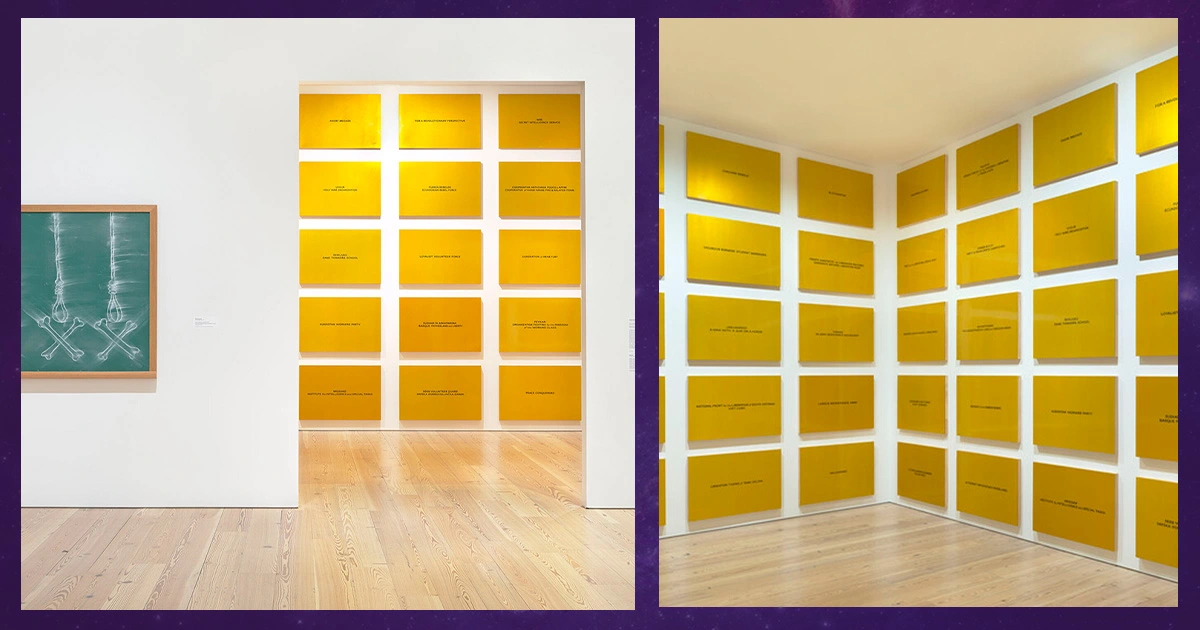
Artist Daniel Joseph Martinez ’s artwork centered around Museum Tags, a set of buttons visitors were asked to wear to the exhibition. Each button was engraved with the part of the phrase “ I can’t imagine ever wanting to be white. ” People participated in a movement, an awakening, where the artist wanted to spread the message against discrimination through his visitors being the medium. It explains well how participatory art engages audiences and the power storytelling holds.
While grappling to gain its reputation back, another incident in 2019 added to its woes. Whitney Biennial earned the moniker “The Tear Gas Biennial ” as its then-board member, Warren Kanders, owned a defense manufacturing company that produced tear-gas canisters that were being used at the US-Mexico border. Initially, a group of eight artists dropped out of the exhibit via a letter published by Artforum, on the basis that they don't want to be part of the show that promotes violence and hatred in the world. Soon, others followed, especially after the collective Forensic Architecture curated a short film that detailed the use of Safariland products. The result? The protests and pressure from the activists and artists were so intense, criticizing the museum's "toxic philanthropy," that Kanders had to forcibly resign.
Despite the criticisms, today, the Whitney Biennial has evolved in its working, selection of artists, and representation of artworks. More women are coming to the forefront, and people from diverse cultures are getting a chance to represent themselves, showcasing immersive art installations , with being American not a prerequisite anymore. The museum defends its inclusion of non-natives, saying that it welcomes complexity and encourages an “inclusive idea of America.”
What the 2026 Whitney Biennial vividly highlights is that in such fractured times, the world is in, we are interdependent, a reminder that we can never truly exist or function solo. Curated by Marcela Guerrero and Drew Sawyer, the Biennial reflects on the theme of “ relationality ” in the present-day muddled American environment, focusing on interspecies kinships, familial relations, technological affinities, and geopolitical quagmires. It expressed that “relational art” brings discomfort alongside tenderness—it doesn't shy away from tension, unease, or humor in the mess. Through multisensory, interactive experiences (soundscapes, scents, tactile elements, playful digital or physical setups), it makes us feel those entanglements viscerally rather than intellectually.
Inspired by such global events, provocative art that feeds and yet questions the rationality of one’s mind, Sentient By Elysian , a UAE-based events agency, creates immersive exhibition experiences that never fail to leave a lasting impression. With its recent gaming space called Money Dash that it created for e&, SBE has proved why audiences prefer interactive experiences.
Whitney Biennial this year gave way to audience engagement through its carefully curated theme of “relationality.” The 82nd edition of the biennial gave way to 56 artists from around the world, apart from collectives and duos. Some of the artworks that stole the show were:
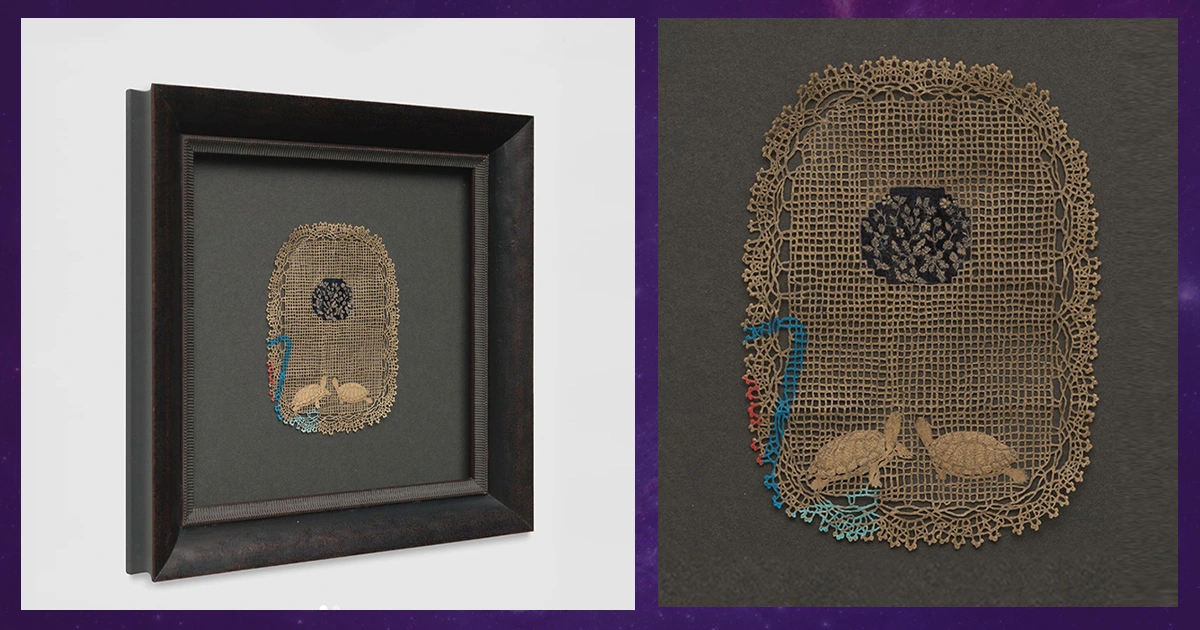
Jasmin Sian is known for recycling materials, often brown paper bags or other single-use objects, into marvelous works of art. She intricately cuts into materials, taking hours and hours, to create masterpieces. Using trash like fast-food bags or maybe the wrapper from a biscuit, she colors over them with tiny, dense details. These plants and animals that she often carves and paints in small scale often demand a closer look due to the intricacy. For her immaculate, intricate works, she also earned a Joan Mitchell grant in 1998.
Her 2025 artwork, “ spring dandelion and wild strawberries with texas bayou ghost turtles ” is a lace-like paper artwork that resembles worn-out crocheted mats that she made using an X-Acto knife. Her works are like paying a tribute to nature in a unique and delightful way, almost the way a devotee devotes themselves to Mother Earth. Her works take one to nostalgia, the simple life patterns, something that relates to the spirit of the Whitney Biennial, nothing short of an immersive exhibition experience.
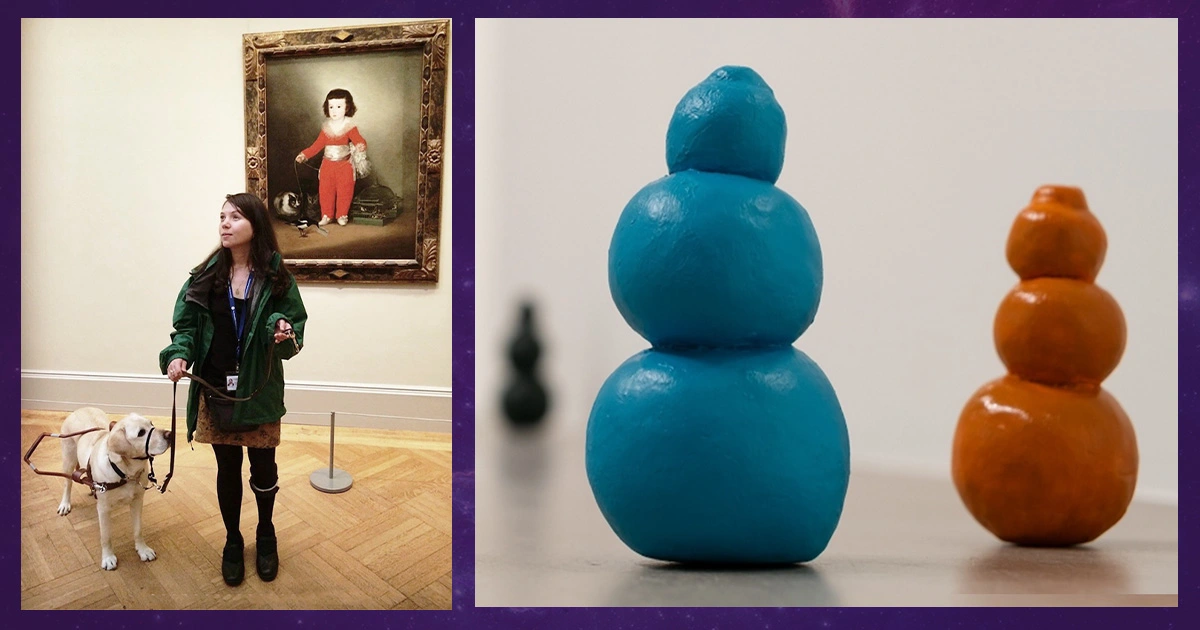
The artist lost her eyesight in a tragic hit-and-run accident in the year 2010, and ever since her service dog joined her, she has beautifully depicted the interdependence between humans and their pets. Her yellow Labrador, named London, has been the inspiration behind her works. More so, her portraits blur the lines between the two bodies, as if she exists through the dog and vice versa.
But when London’s health began to decline, Gossiaux started hand-crafting 100 sculptures of a Kong toy, which was the dog’s favorite. Filling a vast plinth in the Biennial, the artist imagines that these bulbous toys will bring eternal happiness to London, who took her last breath in September 2025. Her artwork, “Co-Shaping One Another with the Moon, 2025,” showcasing the two, hangs on the wall at the biennial as a homage to the two’s bond.
Whitney Museum says that the artist considers London her equal collaborator, epitomizing the kinship between species through interdependence, love, and support, especially by service animals. Her works are the finest examples of Whitney Biennial participatory art, filling one’s heart with warmth, compassion, and tears of joy as one sees the pieces with the naked eye.

Aziz Hazara’s “Moon Sightings” were the sine qua non of the 2026 Whitney Biennial. It set the vibe of the show exactly how curators intended. One of the best examples of the participatory art scene, Hazara used the biometric data and retinal scans derived from discarded objects of American soldiers in his homeland, Afghanistan, such as night-vision goggles, to bring to life his Moon Sightings. Born in one of the most contested areas of Wardak, Hazara, through his green and purple prints, depicts otherworldliness, appearing haunted while spurring the energy of disturbed lands. Set against a wall wrapped in NATO thermal blankets, Hazara’s work dapples the influence the U.S. has globally, in particular as a military force.
Works by Aziz Hazara have also gained significant recognition over time globally, including in the 2025 Sharjah Biennial .
Art speaks a language that mere words cannot express. What you see and what you perceive can carry as many interpretations as possible, because the mind cannot be locked within the walls of a room. For centuries, art has been used as a medium to express feelings, send messages, set examples, or start movements. The Whitney Biennial has had a curvy, roller-coaster ride over the years. Eight decades and going strong, the Whitney never fails to portray the American art scene, which is influenced by the events that shape America.
This year's biennial focused on “relationality,” and numerous artists contributed to bringing that theme to life. It focused on one inevitable question: Are we truly solo? In the times that wrap America and the world in chaos, the Whitney Biennial 2026 has been an eye-opener in numerous ways. It highlighted all aspects of life, from relationships and interdependence between a human and his pet to paying ode to Mother Nature. The biennial provoked thought, raised questions, challenged norms, and guided the future of the art scene.
Website | LinkedIn | Instagram | YouTube | Facebook