
12-03-2026
Marshmallow Laser Feast: Immersive Art as Environmental Experience...


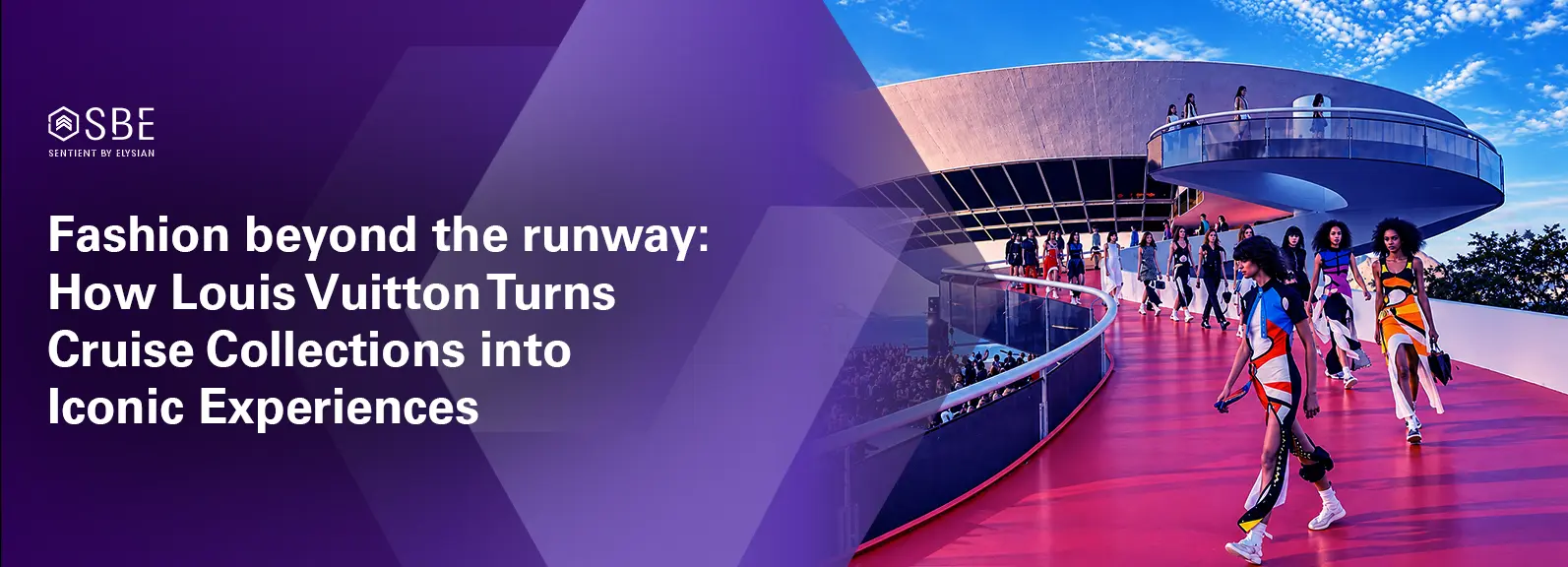
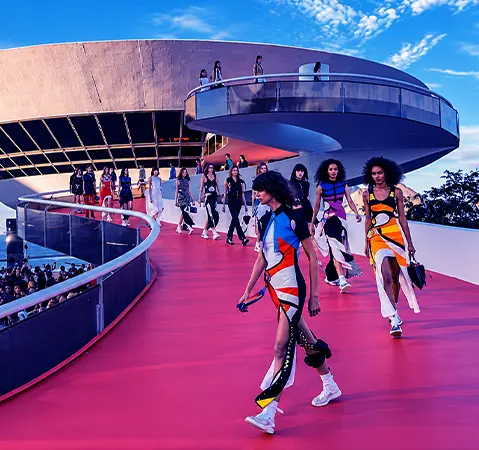
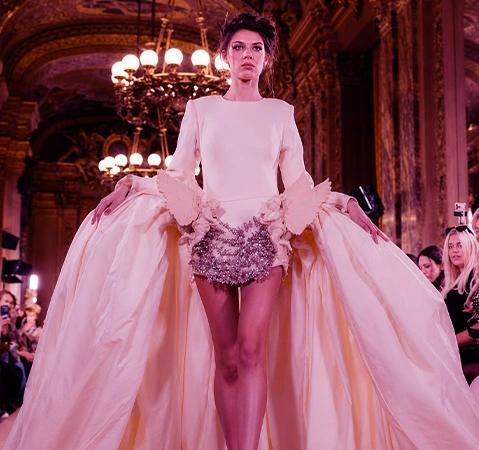
Modern luxury is no longer defined solely by the garments on the runway. Leading fashion houses now create experiences that bring together iconic architecture, live production, and spatial storytelling. Once primarily industry presentations for press and buyers, runway shows have evolved into cultural events with audiences extending far beyond the front row. Louis Vuitton’s Cruise presentations illustrate this shift, using distinctive destinations and carefully designed environments to express the brand’s creative identity. Through livestreams, social media, and global coverage, these experiences continue to generate conversation and extend their impact well beyond the fashion calendar.
Runway shows were confined to neutral exhibition halls or standard temporary structures for decades. A shift occurred when luxury houses recognized that the venue itself could serve as a core narrative element. Under the creative direction of Nicolas Ghesquière, Louis Vuitton has pioneered this approach, building most of its Cruise collections since 2015 around a landmark building and a site rather than a conventional runway setting.
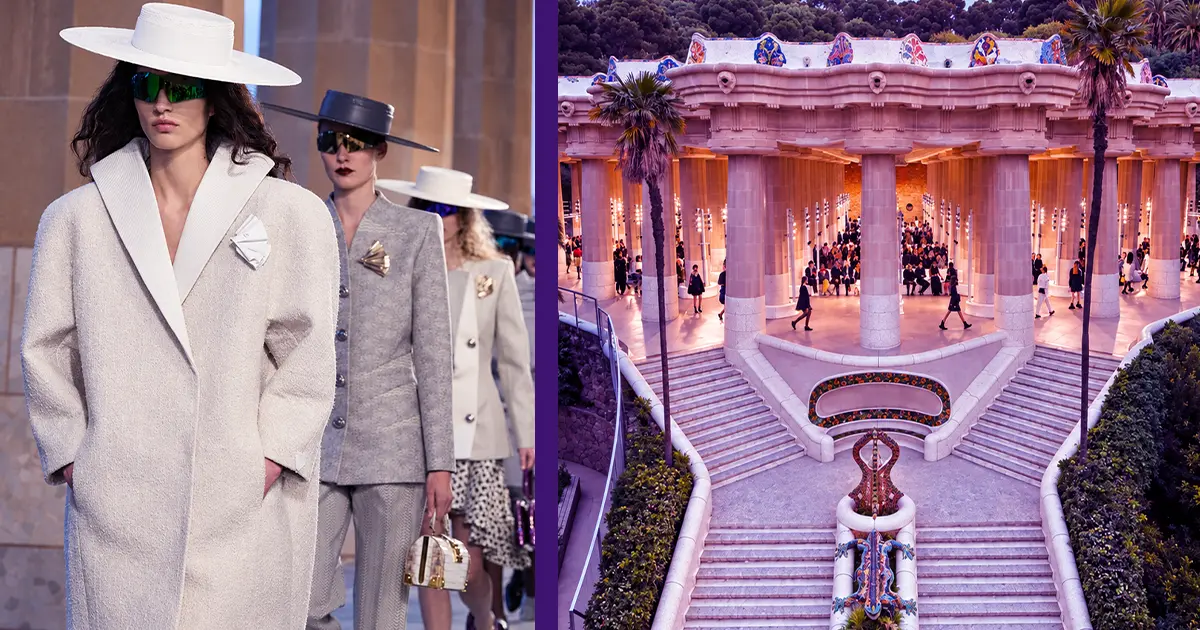
The pattern is consistent across recent years. The Cruise 2025 presentation at Antoni Gaudí’s Park Güell in Barcelona, staged in the park's Hypostyle Room on 23 May 2024, marked the first time a fashion show had ever been held at the site; Ghesquière set the Spanish-inflected collection directly against Gaudí's UNESCO-listed modernist architecture. A year earlier, Cruise 2024 saw Louis Vuitton become the first brand permitted to stage a show on Isola Bella in Italy's Lake Maggiore, built around the island's Baroque Palazzo Borromeo; a planned outdoor presentation in the island's gardens was moved indoors at short notice due to rain, a reminder that these builds are designed with contingency in mind. And for Cruise 2023, the brand staged its show in the Brutalist courtyard of Louis Kahn's Salk Institute in La Jolla, California, timed so the collection opened as the sun set over the Pacific.
These examples demonstrate how the venue can do more than provide a memorable backdrop. Its architecture, history, landscape, and natural conditions can shape the audience’s experience and communicate a creative direction before the first model appears. For experiential designers, the lesson is clear: the choice of space is itself a storytelling decision.
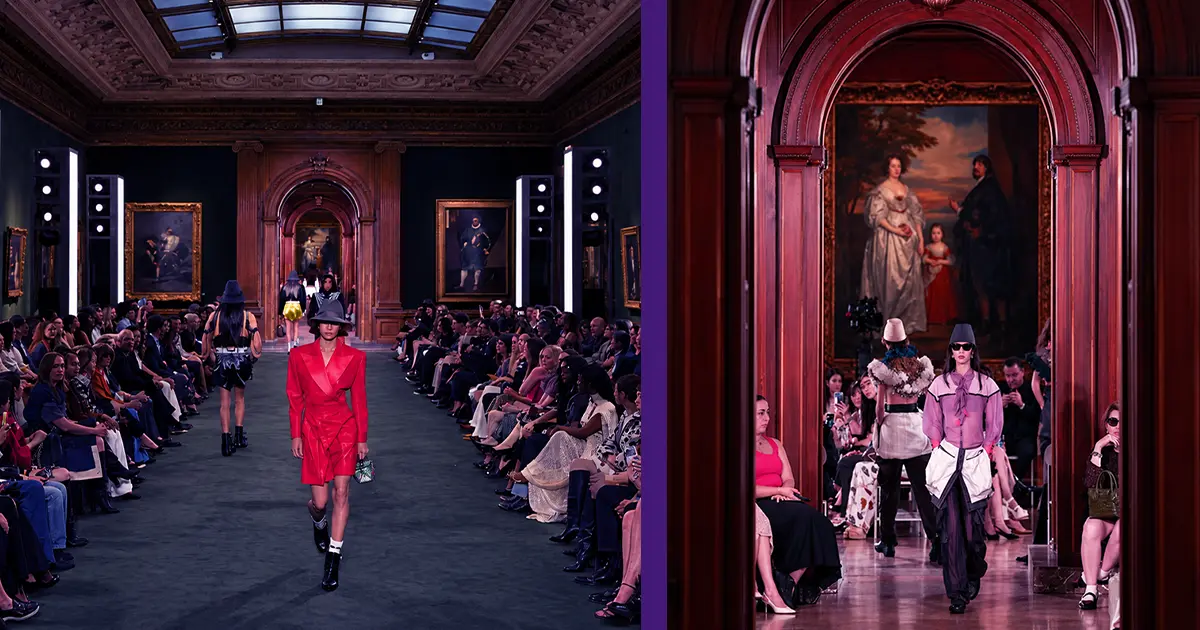
Creating a memorable fashion experience in a historic or unconventional destination requires careful technical planning. Heritage buildings, public parks and remote locations introduce constraints that conventional event venues are designed to accommodate. The challenge is to deliver the creative vision while respecting the architecture, protecting the site and ensuring the production works for both the live audience and the broadcast.
Lighting must complement the character of the space while meeting the demands of photography and video. Temporary rigging, structural loads and equipment placement may be restricted, requiring production teams to develop solutions that minimise physical impact. Sound presents its own challenges in reflective, open-air or irregularly shaped environments, where coverage and acoustics must be managed without overwhelming the setting. Power, cabling, seating, audience circulation and sightlines also need to be planned around existing structures, access routes and terrain.
Weather and contingency planning add another layer. Louis Vuitton’s Cruise 2024 presentation at Isola Bella was originally planned for the island’s outdoor gardens but moved inside Palazzo Borromeo because of rain. The change illustrates why productions in unconventional locations need to account for alternative layouts and operational scenarios from the outset.
Broadcast requirements are equally important. Camera positions, lighting for multiple formats, content capture, and connectivity must be integrated into the production plan, allowing the experience to translate from the physical venue to a global digital audience.
The result is an experience in which the technical complexity remains largely unseen. Audiences encounter a collection moving through a remarkable setting, while the production team has already resolved the structural, logistical, and environmental challenges that make that moment possible.
The physical experience for guests attending in person and the digital experience for a much larger audience watching through livestreams, social platforms, photography, and short-form video.
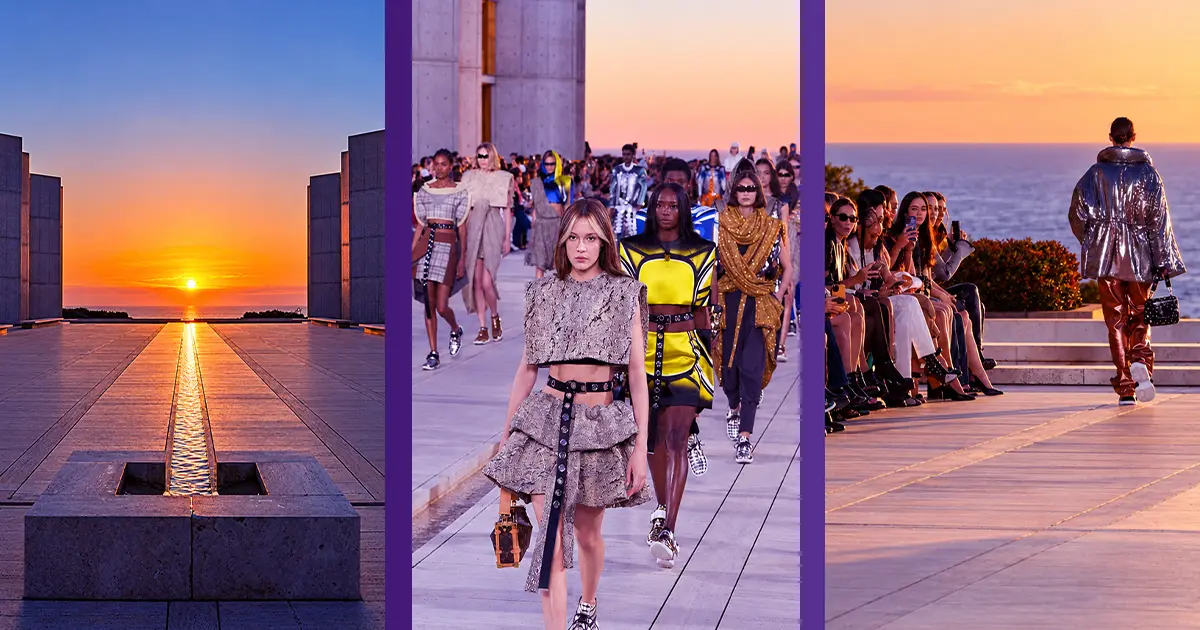
This dual audience influences how a show is designed, not simply how it is broadcast. A landmark venue such as Park Güell or the Salk Institute provides an atmosphere for guests while also creating a recognisable visual setting for audiences watching on screen. Wide establishing shots, carefully planned sightlines and the relationship between the models and architecture help translate the scale of the physical experience into compelling digital content.
While celebrities, fashion insiders and invited guests experience the show in person, livestreams, multi-camera coverage and real-time social content allow audiences around the world to engage with the same event. Louis Vuitton’s Cruise 2023 show at the Salk Institute, for example, incorporated aerial drone footage of the courtyard setting as part of its coverage, capturing the relationship between the architecture, the runway and the Pacific landscape. Viewers can revisit individual looks, share clips, and examine the setting almost as closely as the collection itself.
This ability to blend high-end live hospitality with instant global reach is what turns a 15-minute runway show into a multi-day viral topic.
This is what turns a 15-minute runway show into a multi-day conversation; the physical show provides the moment, but the production is built so that same moment performs just as well compressed into a ten-second clip.
Fashion shows are evolving into a more expansive form of brand storytelling. What was once primarily a presentation for buyers has become an experience where architecture, performance, technology, and creative production work together to communicate a brand’s identity to audiences far beyond the runway.
Louis Vuitton’s Cruise presentations demonstrate how this shift takes shape. From the Brutalist courtyard of the Salk Institute to Isola Bella’s Baroque setting and the modernist architecture of Park Güell, each destination contributes its own character to the collection’s narrative. The production succeeds when technology supports that relationship rather than competing with it, allowing the architecture, atmosphere and creative direction to remain at the centre of the experience.
The same principle applies to audience design. A show must create a meaningful experience for those physically present while translating its most important moments into content that can travel across digital platforms. The venue, staging, lighting and content capture are therefore connected parts of one creative strategy, rather than separate considerations.
For Sentient by Elysian, this evolution reflects a wider direction in experiential design: bringing creative storytelling, spatial design, technology and production together to create environments that communicate a brand’s purpose. The lesson extends beyond luxury fashion. When every element is designed around a coherent narrative, an event becomes more than a temporary presentation. It becomes a brand experience that audiences can enter, remember, and continue engaging with long after the live moment has ended.
Website | LinkedIn | Instagram | YouTube | Facebook