
16-02-2026
How the Olympics Turned Opening Ceremonies into Immersive Global Shows ...


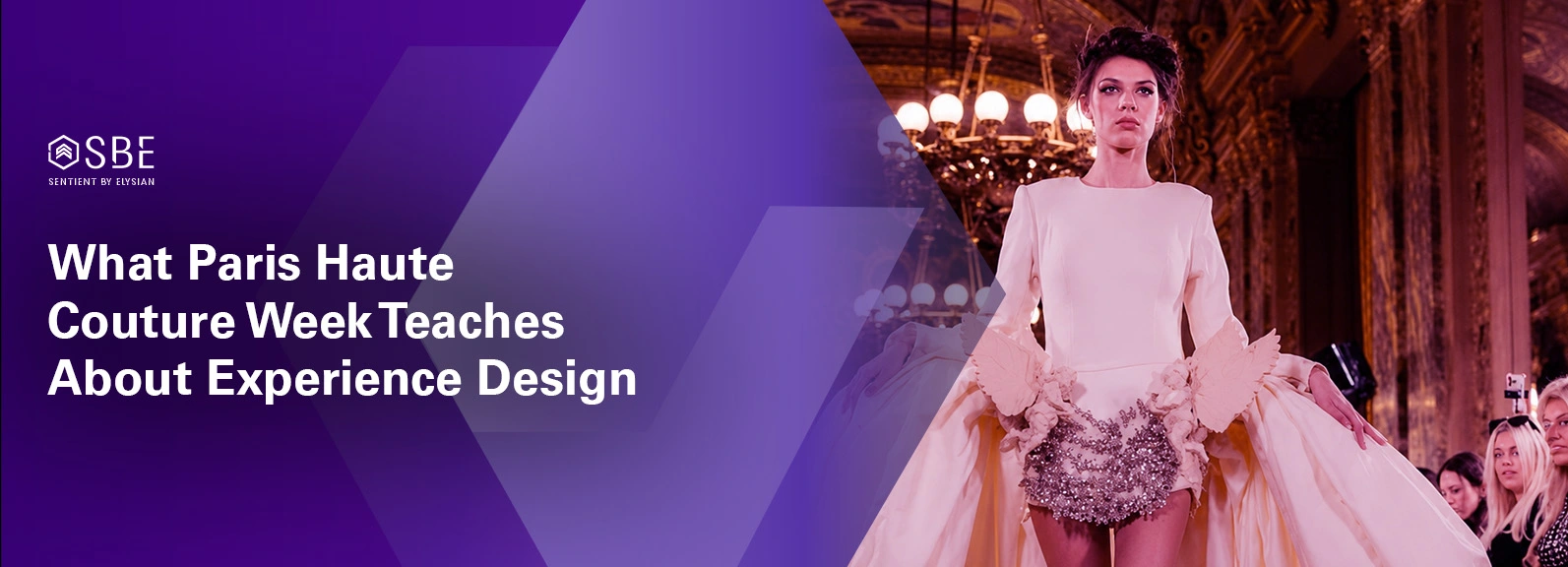
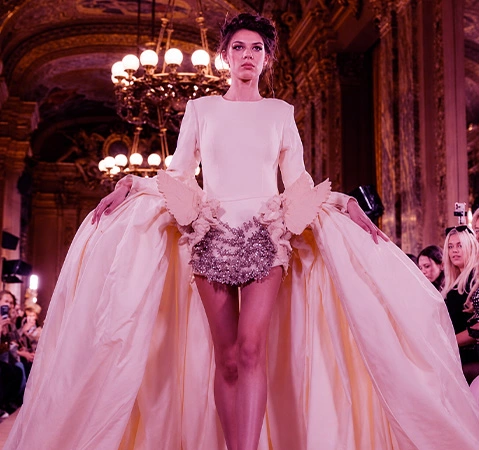
Paris Haute Couture Week put some of Paris's most iconic theatres and cultural venues to work as more than just beautiful backdrops. Chanel presented inside the Palais Garnier, Stéphane Rolland paired his collection with a live symphony at the Théâtre des Champs-Élysées, and Viktor & Rolf transformed the runway into a moving performance that revealed its meaning in real time. Pierpaolo Piccioli made his couture debut at Balenciaga, while Manish Malhotra introduced his vision to Paris, both using their first moments on a new stage to define their creative identity before a single silhouette took center stage. None of these decisions were purely aesthetic. Every choice, from the venue and pacing to the sound, staging, and reveal, was carefully planned to shape the audience's experience.
The same principles apply to brand activations, museum openings, product launches, and immersive events. Rather than a fashion recap, this article explores the week's productions as a source of inspiration for anyone designing memorable live experiences.
Most brands simply rent a venue. Chanel, on the other hand, stepped into a legacy. For more than 150 years, the Palais Garnier has set the stage for grandeur, welcoming visitors with its gilded ceilings, sweeping staircase, and iconic red-and-gold auditorium. The moment guests walked through its doors, the venue brought its own sense of history and prestige. Chanel didn't need to create that feeling; it simply had to decide how to work with it.
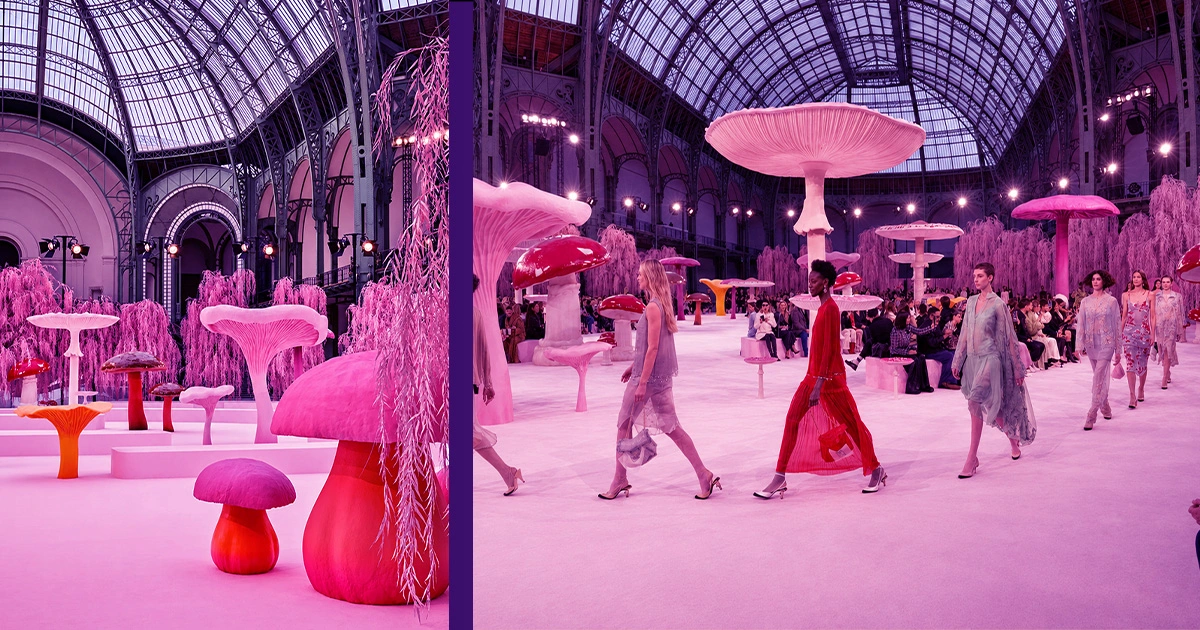
This season, the house introduced fairy-tale and storybook-inspired elements into a setting built for grand opera, creating a subtle contrast rather than trying to match the architecture. That creative tension is what made the experience so compelling. It's also a valuable lesson for event designers. Instead of always reinforcing what a venue is already known for, introducing an unexpected narrative can create a stronger emotional response and leave audiences with a more memorable experience.
This follows a pattern of houses treating specific Parisian buildings as pre-loaded emotional shortcuts:
The lesson for experienced designers isn't "pick a beautiful building." It's that a venue arrives with an audience's expectations already installed, and the strongest productions make a conscious decision about whether to confirm those expectations or subvert them, rather than defaulting to whichever reads as safest on a mood board.
Recorded music can be timed down to the exact second. A live orchestra can't, and that's exactly why Stéphane Rolland chose one. At the Théâtre des Champs-Élysées, a live symphony conducted by Zahia Ziouani did far more than accompany the collection. It introduced something rare in highly choreographed productions: a human rhythm that could rise, pause, or build naturally with the atmosphere in the room.
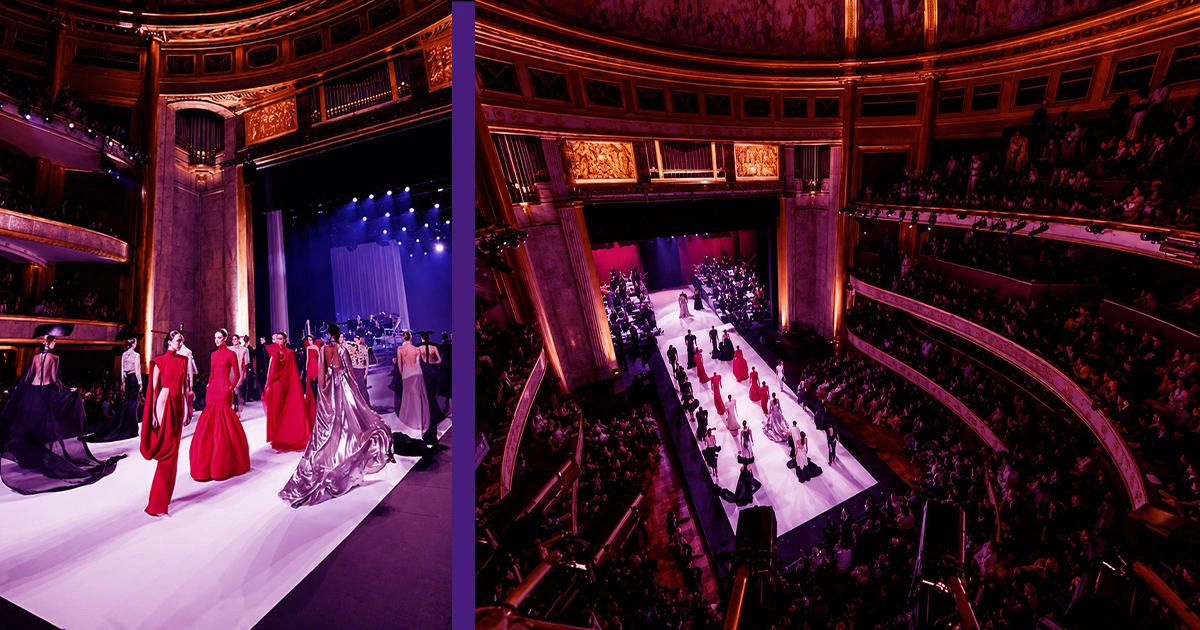
It's a far more demanding choice than simply pressing play. A live orchestra means the choreography must adapt to the music, not the other way around, and pacing can't be locked into a rehearsal timeline and left untouched. The reward, however, is something recorded audio struggles to replicate. Audiences can feel the energy and effort behind a live performance, and that sense of authenticity gives the entire experience greater emotional weight.
Several couture houses embraced this idea in different ways throughout the week:
For event producers, the takeaway isn't that every event needs a live orchestra. It's that pacing is a creative decision, not just a logistical one. Sometimes the most memorable experiences come from allowing room for a live, human element, something that can't be perfectly controlled but adds a level of emotion and authenticity that a fully programmed production simply can't recreate.
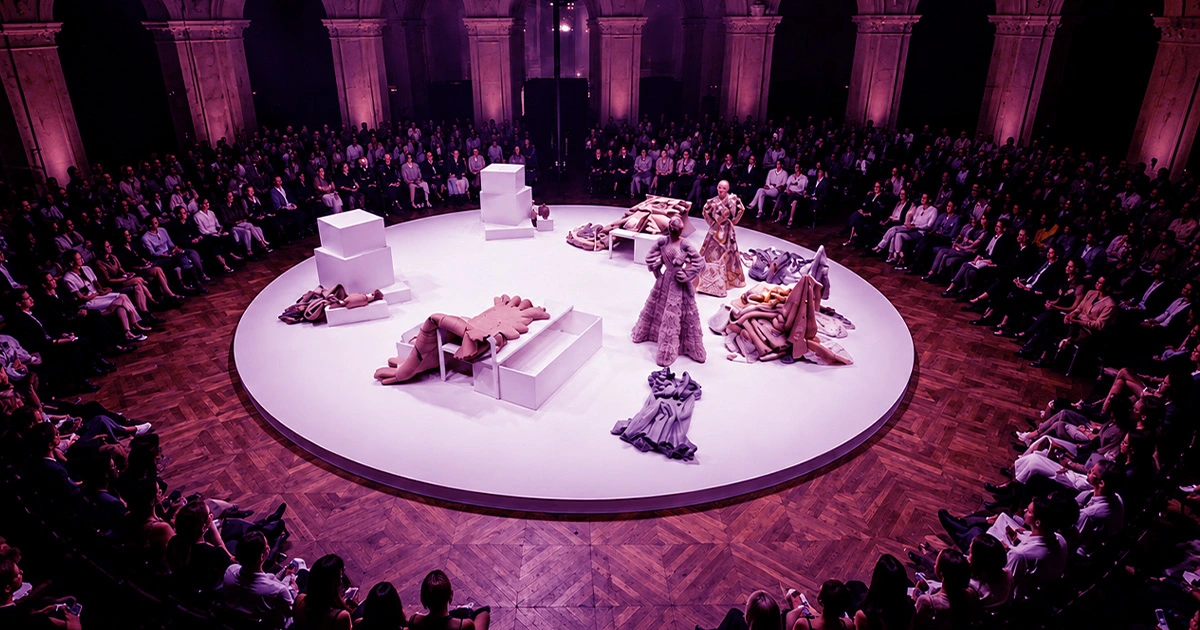
Most runway staging tries to resolve into a single clear idea. Viktor & Rolf's moving circular platform did the opposite: two models walked and undressed in continuous motion, the show closing on gowns that spelled out "Decadence" and "Restraint": two words in direct tension, staged at the same moment, on a set that never stopped moving under them.
The mechanism worth studying here is unresolved contrast used as the climax, rather than a single message building to a clean payoff. Most staging defaults to convergence: every element pointing toward one confirmed idea by the final moment. This inverted the formula and closed on a contradiction, which is a considerably harder note to land, because there's no obvious cue for the audience about how to feel, and that ambiguity is what made it memorable rather than simply well-executed.
A moving stage also solves a practical problem that static sets can't: it removes the audience's ability to anchor on a fixed frame, which is part of why the undressing sequence reads as performance rather than as a wardrobe malfunction waiting to happen. Motion changed what the same action would have meant on a still runway.
For anyone designing a live reveal, a product unveiling, an award moment, or a keynote climax, the practical takeaway is narrower than "be theatrical." It's that resolution is a choice, not a default, and leaving the final beat genuinely unresolved is a legitimate design decision when the goal is a moment people discuss afterward rather than one they simply admire in the room.
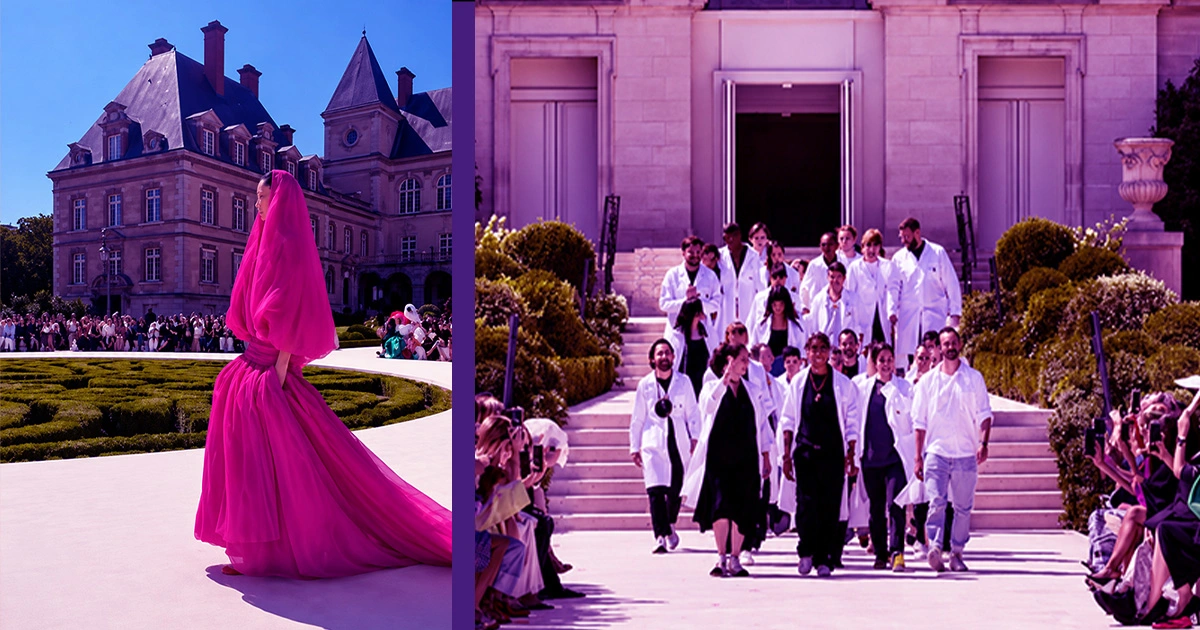
A debut show has a challenge that no other presentation faces. Before the audience can appreciate the collection, they first need to understand who is standing in front of them. That was the task facing both Pierpaolo Piccioli with his first couture collection for Balenciaga and Manish Malhotra with his Paris couture debut. In many ways, these presentations were introductions before they were collections, each answering the same unspoken question: Who is this creative voice, and what does it represent?
For Piccioli, the challenge was stepping into one of fashion's most recognizable houses. Balenciaga has a strong creative identity, so every new collection is naturally compared to its legacy. The goal wasn't simply to present something new, but to strike the right balance between honoring the house's heritage and introducing a fresh perspective. Malhotra faced the opposite challenge. Rather than building on an established relationship with the audience, he had to introduce an entirely new design language to Paris, giving people enough context to connect with his vision from the very beginning.
The same challenge appears in many brand launches, rebrands, and leadership announcements. When audiences already have expectations, change needs to be introduced carefully. When there are no expectations at all, the first moments must build trust and context before the main message can truly resonate. Neither challenge is solved with a bigger stage or more impressive technology. They're solved through thoughtful sequencing, knowing what the audience needs to understand first, what should come next, and when the biggest statement should finally be revealed.
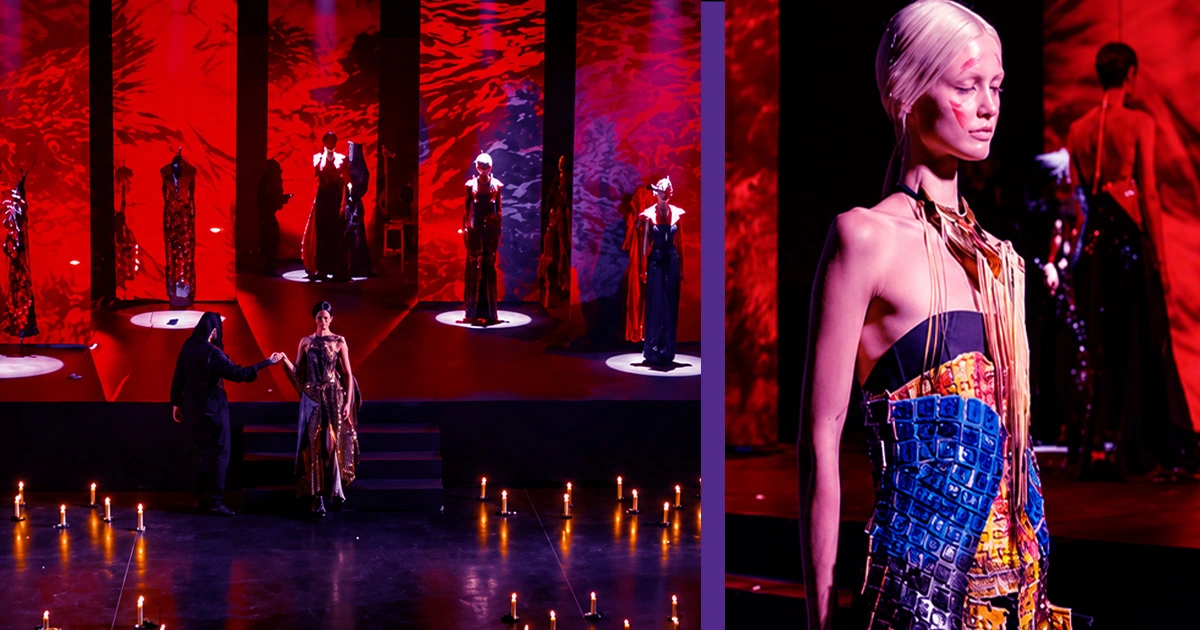
A couture show may only seat a few hundred guests, but its real audience is much larger. Millions will experience it later through a 60-second video, a single photograph, or a headline shared across social media. That digital audience isn't an afterthought; it's part of the production strategy from the very beginning.
This goes far beyond placing more cameras around the runway. Designers create moments that will remain powerful even when reduced to a single image or short clip: a striking wide shot, a memorable set, or a dramatic finale that can stand on its own without the full context of the show. Even the pacing reflects this shift, with strong visual moments introduced early to capture attention in a world where online audiences rarely watch from beginning to end.
That's also why the official platform of the Fédération de la Haute Couture et de la Mode plays such an important role. While social media captures highlights, the full runway films allow audiences to experience the craftsmanship, movement, and storytelling that still images can't fully convey. Fashion houses intentionally guide viewers toward these official productions rather than relying solely on short clips circulating online.
The key lesson is that a hybrid experience isn't simply a live event with cameras added. It's a production designed for two very different audiences at the same time: one experiencing the atmosphere in the room, and another discovering the story later through carefully crafted digital moments. Both experiences are planned with equal intention, even though they're consumed in completely different ways.
The principles behind these productions aren't exclusive to the fashion world. Choosing a venue with emotional significance, deciding between live and recorded performances, introducing bold ideas in ways audiences can embrace, or creating a defining moment that lives on through photos and short videos; these are the same decisions that shape successful product launches, museum openings, exhibitions, government events, and brand experiences.
Paris Haute Couture Week simply offers one of the clearest examples of these ideas in action. Every season, designers refine the balance between storytelling, technology, architecture, performance, and audience engagement under immense creative and logistical pressure. That's what makes couture week more than a source of inspiration; it's a practical reference for anyone designing experiences that people remember long after the event ends.
At Sentient by Elysian, we believe extraordinary experiences are never built around technology alone. They begin with a story, are shaped by strategy, and come to life through design. Technology becomes meaningful only when every element, from architecture and scenography to lighting, content, interaction, and audience flow, works together to serve a single narrative.
That's why we don't see immersive technology as the experience itself. We see it as the language that gives stories physical form, transforms spaces into emotional journeys, and turns moments into lasting memories. Because in the end, people rarely remember the screen, the projection, or the installation, they remember how the experience made them feel.
Website | LinkedIn | Instagram | YouTube | Facebook